Why Jack and Sally's Romance is Secretly Perfect (And Where They Are Now in 2026)
I’ve spent more hours than I’d care to admit staring at the skeletal grin of Jack Skellington and the stitched-up smile of Sally, and not just because I’m a sucker for stop-motion. As a professional game dev and lore-obsessed player, I pick apart character design the way a raven dissects a shiny wrapper. And let me tell you, The Nightmare Before Christmas isn’t just a whimsical goth masterpiece—it’s a secret masterclass in romantic symbolism that took me a few decades (and a bunch of replay viewings) to fully unravel.
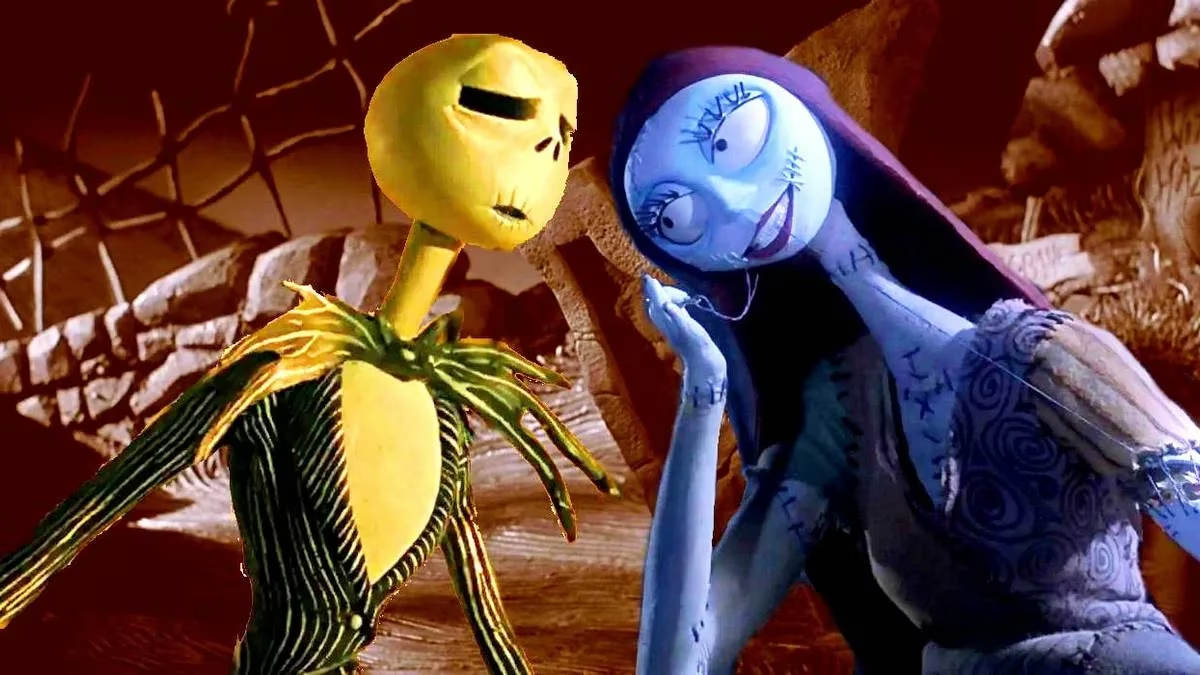
Released back in 1993, the movie is often mistakenly called a Tim Burton directorial job, when it was actually Henry Selick’s stop-motion wizardry and the scripts of Caroline Thompson and Michael McDowell that birthed those unforgettable lines. Still, Burton’s spindly fingerprints smudge every frame—he dreamed up the concept after spotting Christmas and Halloween decorations clashing in a store window, and that collision of holidays became an aesthetic we still can’t escape. But the real magic, the thing that makes my designing brain light up like a pumpkin bomb, is how Jack and Sally are literally two halves of a whole person.
Think about it. Jack is a skeleton—all bones, zero meat, no stuffing. Sally, a rag doll stitched together from scraps, is all flesh and fiber but has zero internal structure. She’s the Frankenstein’s monster of Halloween Town, all softness and falling-apart limbs, while Jack is pure scaffolding. Separately, they’re incomplete anatomy. Together? They form a complete body. Bones plus flesh equals a functioning person. That’s not just cute; it’s a narrative mic drop. The visual storytelling whispers what the plot eventually shouts: Jack and Sally complete each other physically, emotionally, and spiritually. No other couple in cinema (or gaming, for that matter) has this level of built-in organic symbolism. It’s the kind of design that makes me jealous, as someone who’s spent years trying to code romance mechanics that don’t feel tacked on.
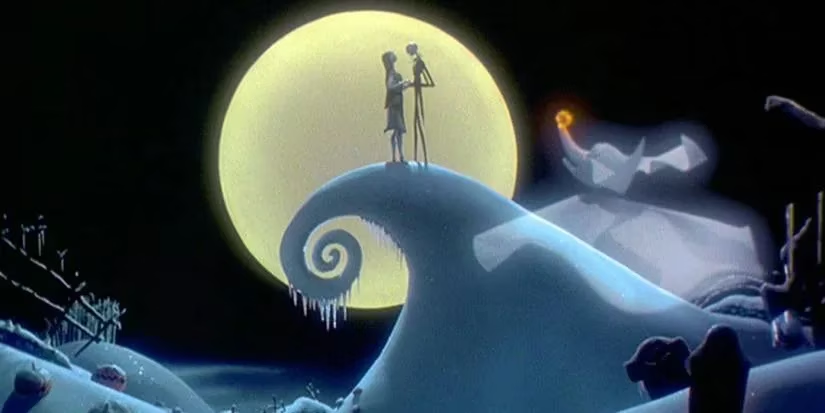
The movie’s ending seals the deal with a kiss on Spiral Hill, but that isn’t where their story stops. For years, fans like me were left hanging, begging for a sequel that Henry Selick and Tim Burton rightfully refused to make (thank the Pumpkin King for that artistic integrity). Instead, their love spilled into literature. In 2022, Shea Earnshaw’s YA novel Long Live the Pumpkin Queen arrived, putting Sally in the spotlight. She and Zero accidentally tumble into Dream Town, an ancient realm that’s way more dangerous than its name suggests. Suddenly, Sally’s not the damsel stitching her own limbs back on—she’s the hero racing to save Jack, who’s been captured by the town’s pastel nightmare. I devoured that book in one sitting, grinning every time Sally’s botanical knowledge or patchwork resilience solved a crisis. And yes, the book confirms what we all hoped: Jack and Sally are happily married, and Sally is officially crowned the Pumpkin Queen of Halloween Town. Cue the happy tears.
But here’s where my 2026 brain gets really excited. Two direct sequel novels by Megan Shepherd were announced, and I’ve just finished the second one. The 2025 release picked up threads from Dream Town, throwing Jack and Sally into a mystery that tested their freshly-minted royal teamwork. And the 2026 novel—oh boy—it finally explores the other holidays’ worlds in a way that rivals any sprawling RPG map. We get to see Jack using his skeletal frame to navigate thorny wastelands while Sally’s detachable limbs solve mechanical puzzles. It reads like a love letter to couples who game together, honestly. After reading them, I couldn’t help daydreaming about a theoretical Nightmare Before Christmas action-adventure game where you could switch between Jack and Sally, their physical differences dictating abilities. Jack could fit through tight spaces; Sally could absorb fall damage with her stuffing. A developer can dream, right?
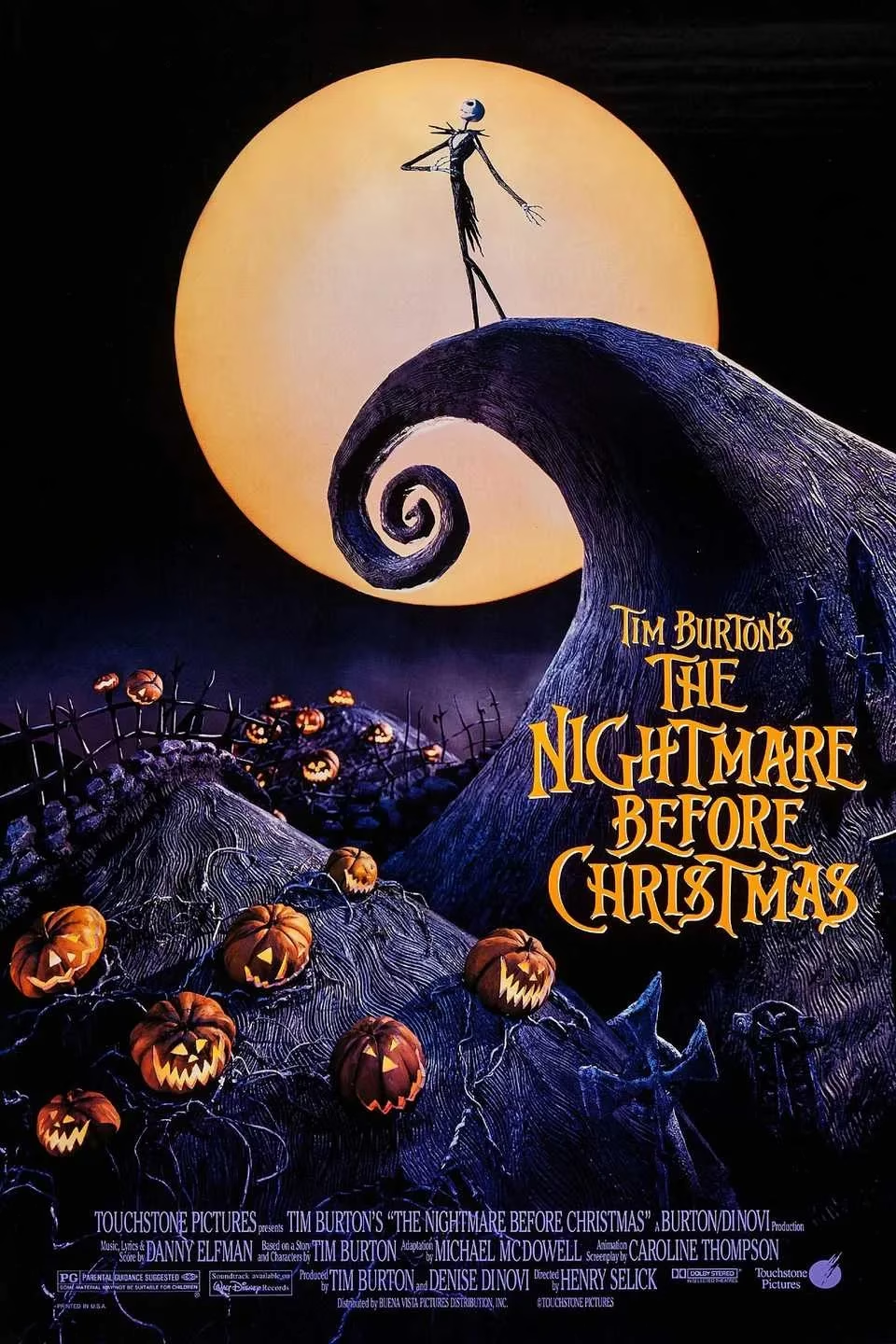
What blows my mind even now, thirty-three years after the film’s release, is how timeless this love story remains. The movie’s stats speak for themselves: a tight 76-minute runtime, a cast of absolute legends (Catherine O’Hara, Danny Elfman, Ken Page), and a measly $24 million budget that somehow birthed an immortal franchise. It’s a masterwork of “less is more.” And the fact that the sequels chose to deepen the romance rather than rehash the same beats? Chef’s kiss. In 2026, I don’t need a big-screen reboot or a half-hearted CGI sequel. I’ve got books where the Pumpkin King and Queen get their hard-won happily ever after, and I’ve got a skull full of design lessons I’m stealing for my own pixel-art characters. Bones and stuffing, folks. Sometimes the simplest ideas are the most soul-completing.
This content draws upon CNET - Gaming to frame how a Jack-and-Sally dual-protagonist concept could translate into modern action-adventure design: coverage of current platform tech, accessibility features, and control innovations reinforces why “switch-on-the-fly” character kits (Jack for narrow traversal and precision movement; Sally for modular interactions and survivability) tend to land best when the game’s systems, camera, and inputs are built around those contrasts from the start—mirroring the film’s bones-and-stuffing symbolism as readable gameplay language rather than just lore.