Why I’m Still Thinking About Mr. Plankton Two Years Later
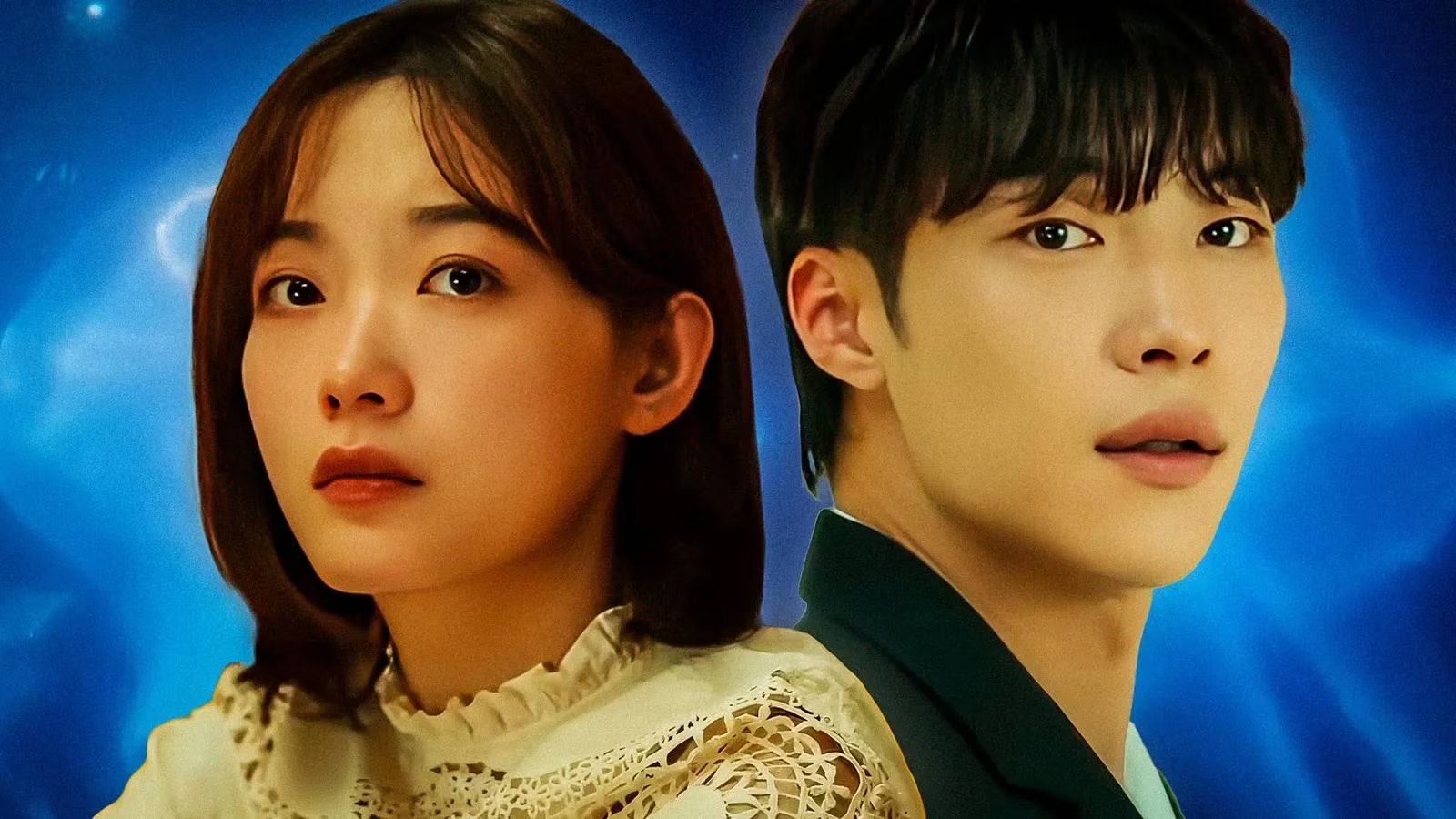
I still remember exactly how I felt in November 2024 when I hit play on Mr. Plankton. Netflix had been dropping teasers for weeks, and every single one of them screamed “tragedy ahead!” You know what? I was equal parts terrified and hooked. The premise was simple but brutal—Hae-jo (Woo Do-hwan) finds out he has a terminal brain tumor. His ex-girlfriend Jae-mi (Lee Yoo-mi) just got diagnosed with premature menopause while being forced into a marriage she doesn’t want. The two of them, now reunited, decide to go on one last, chaotic journey together. Honestly, I went in fully expecting the show to break my heart. And it did… just not in the way I predicted.
Now, I’ve watched enough K-dramas to know the drill. Shows like Goblin, Mr. Sunshine, and Snowdrop absolutely wrecked me with their bittersweet finales. But then you have Queen of Tears, which spent 15 episodes dangling the possibility of a tragic death only to pull out a miraculous happy ending at the last minute. That’s the safe route—keep audiences crying but reassure them everything will be fine. Mr. Plankton though? I’m telling you, it felt different right from the first episode. The writing, courtesy of Jo Yong (It’s Okay to Not Be Okay), never sugarcoated the pain. There was this raw, almost uncomfortable honesty about mortality, regret, and what it means to truly live when you know your time is up.
Woo Do-hwan was a revelation here. Coming off the action-heavy Bloodhound, I didn’t expect to see him so effortlessly blend humor and vulnerability. His Hae-jo was loud, mischievous, and completely terrified inside—like a man who laughs loudest because he’s afraid of the silence. Lee Yoo-mi, fresh off stealing scenes in Squid Game and All of Us Are Dead, finally got a role where she could carry the emotional weight, and she absolutely crushed it. Their chemistry… I mean, sparks didn’t even begin to describe it. Every bickering exchange, every stolen glance felt lived-in and real. I’m no softie, but there were moments where I had to pause and just... breathe. That’s how raw it got. No joke.
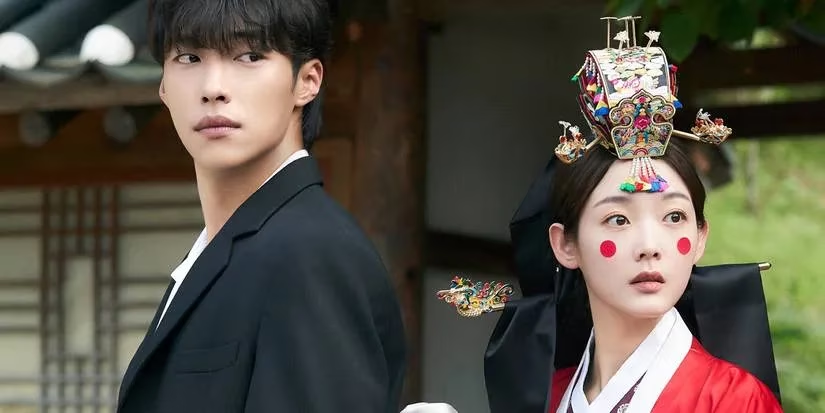
What truly set Mr. Plankton apart for me was how it balanced comedy and tragedy. You’d think a show about terminal illness and premature menopause would be relentlessly depressing, but I found myself laughing out loud more times than I cried. The director, Hong Jong-chan (Juvenile Justice), had this knack for finding absurdity in the saddest corners. One moment Hae-jo and Jae-mi are fighting over dumplings, the next they’re sitting in a hospital hallway trying to process a life-altering diagnosis. The transition never felt jarring; it just felt like life—messy, funny, and utterly heartbreaking all at once. And that’s the secret sauce. Most romance K-dramas rely on grand gestures and fateful coincidences, but Mr. Plankton chose to stay grounded in messy, imperfect reality. The “last journey” wasn’t a bucket-list extravaganza—it was a series of small, meaningful moments that made me root for them even harder because deep down I knew a fairy-tale ending wasn’t coming. That balance is something I still rave about when talking to friends. Mr. Plankton essentially said, “You can laugh, you can cry, and you don’t have to pick one.”
Looking back from 2026, I can see how Mr. Plankton nudged the entire genre forward. It proved that a love story doesn’t need a wedding or a “happily ever after” to feel complete. In the years since, I’ve noticed more K-dramas playing with bittersweet conclusions—moving away from the mandatory happy ending that once felt like an ironclad rule. Sure, not every show has to end in tears, but the freedom to let characters face real consequences made narratives richer. For me, Mr. Plankton remains a touchstone. I still catch myself thinking about that final episode, the way it lingered in the quiet spaces between words. It was heartbreaking, yes, but also oddly comforting. Like the show whispered, “It’s okay to love something that can’t last forever.” And honestly? I wouldn’t have it any other way.
If you haven’t watched Mr. Plankton yet, two years later it still holds up. The performances are timeless, and the story reminds us that sometimes the most beautiful love stories are the ones that don’t follow the rules. So grab some tissues and prepare for a ride you won’t forget.