Why Crichton and Aeryn's Love Story in Farscape Was Always Doomed to Heartbreak
You know, even though it's been over twenty years since Farscape ended, I still find myself thinking about Moya and her crew. Out of all the surprisingly complex love stories woven through that wild space opera, there's one that sticks with me – the one that feels like it was always destined for heartbreak, even if the credits rolled before we saw it happen. I'm talking, of course, about John Crichton and Aeryn Sun. Their 'will-they-won't-they' was the show's beating heart, but man, looking back from 2026, I'm more convinced than ever that a truly happy ending was never in the cards for them. It's the very things that made their love story so compelling that also spelled its inevitable doom.
The Impossible Biology of It All
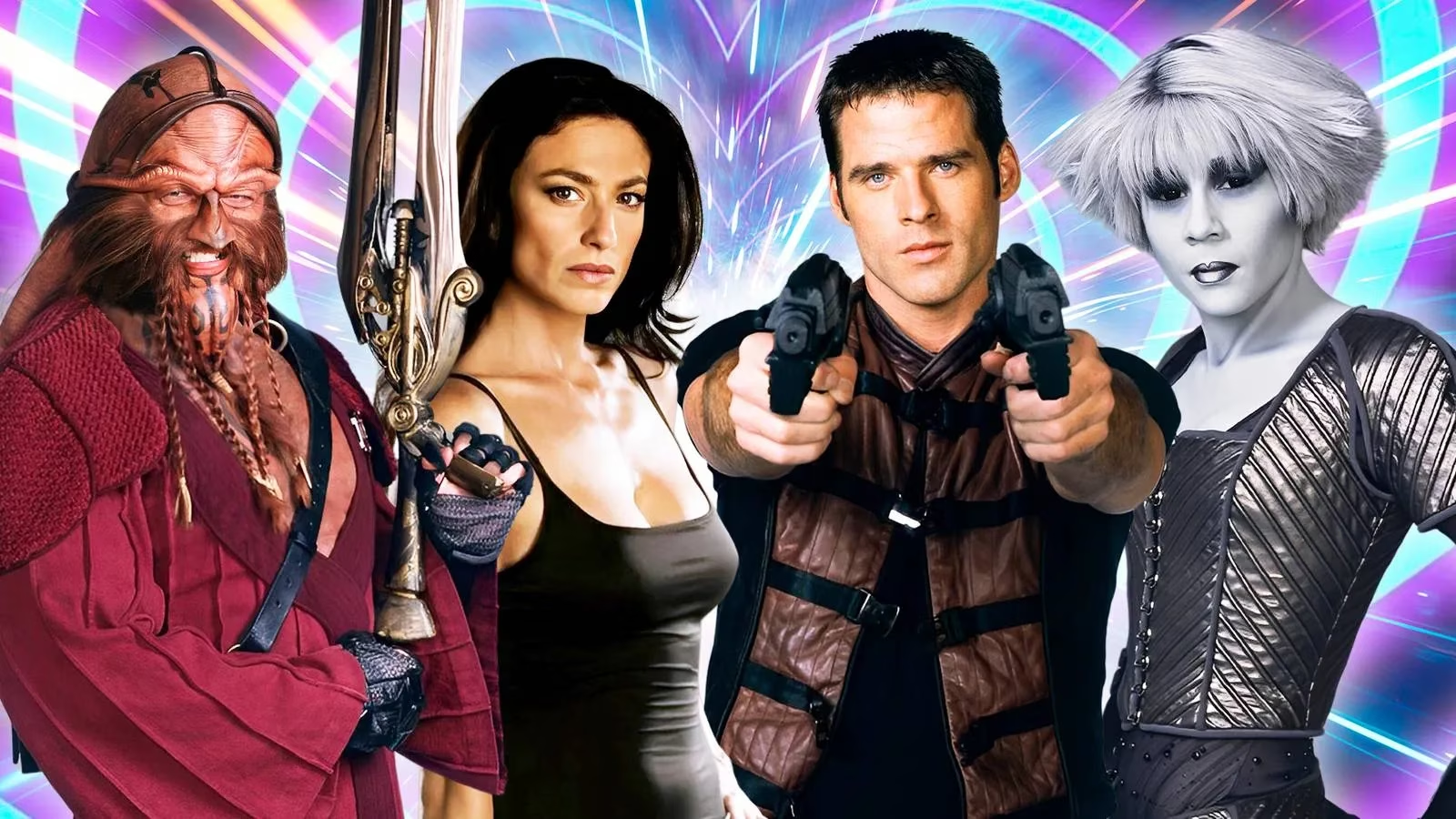
Let's start with the most fundamental, unchangeable problem: they're just not the same. Like, really not the same. Crichton is a human from good ol' Earth. Aeryn? She's a Sebacean. And here's the kicker – they have vastly different lifespans. The show was never super explicit about the numbers, but it heavily implied that Sebaceans can live well past 100 years, maybe a lot longer. Humans? We're lucky if we hit 80 on average.
Think about that for a second. They met when they looked roughly the same age. But if, by some miracle, they managed to settle down and grow old together after the show ended... what then? Crichton would likely pass away decades before Aeryn. She'd be left alone for the final chapter of her incredibly long life. That's not a bittersweet ending; that's a tragedy waiting in the wings. It's the kind of detail the show planted early on, a time bomb in their relationship that was always ticking. Talk about a long-distance relationship with a twist – the distance is time.
Aeryn's Unshakable Peacekeeper DNA
Then there's Aeryn herself. You can take the soldier out of the Peacekeepers, but you can't ever fully take the Peacekeeper out of the soldier. She grew so much on Moya, learned to love, to be part of a family, to be more than a weapon. But those deep-seated instincts? The ones drilled into her from birth? Those never fully left.
When push came to shove, Aeryn's first solution to a threat against her loved ones was almost always violence. Immediate, decisive, brutal violence. Sure, Crichton was often right there with her, gun blazing, but he was usually reacting to her lead. He wasn't the instigator. There were those moments, you know the ones, where Aeryn would just... take off. Decide she had to handle a problem alone, that her way was the only way to keep everyone safe. Every single one of those moments was a potential endpoint. One mission, one solo crusade too many, and that could have been it. She could have been killed in action, leaving Crichton behind. Her own nature, the very thing that made her such a formidable survivor, was also the biggest threat to their future together.
The Beauty of the Struggle
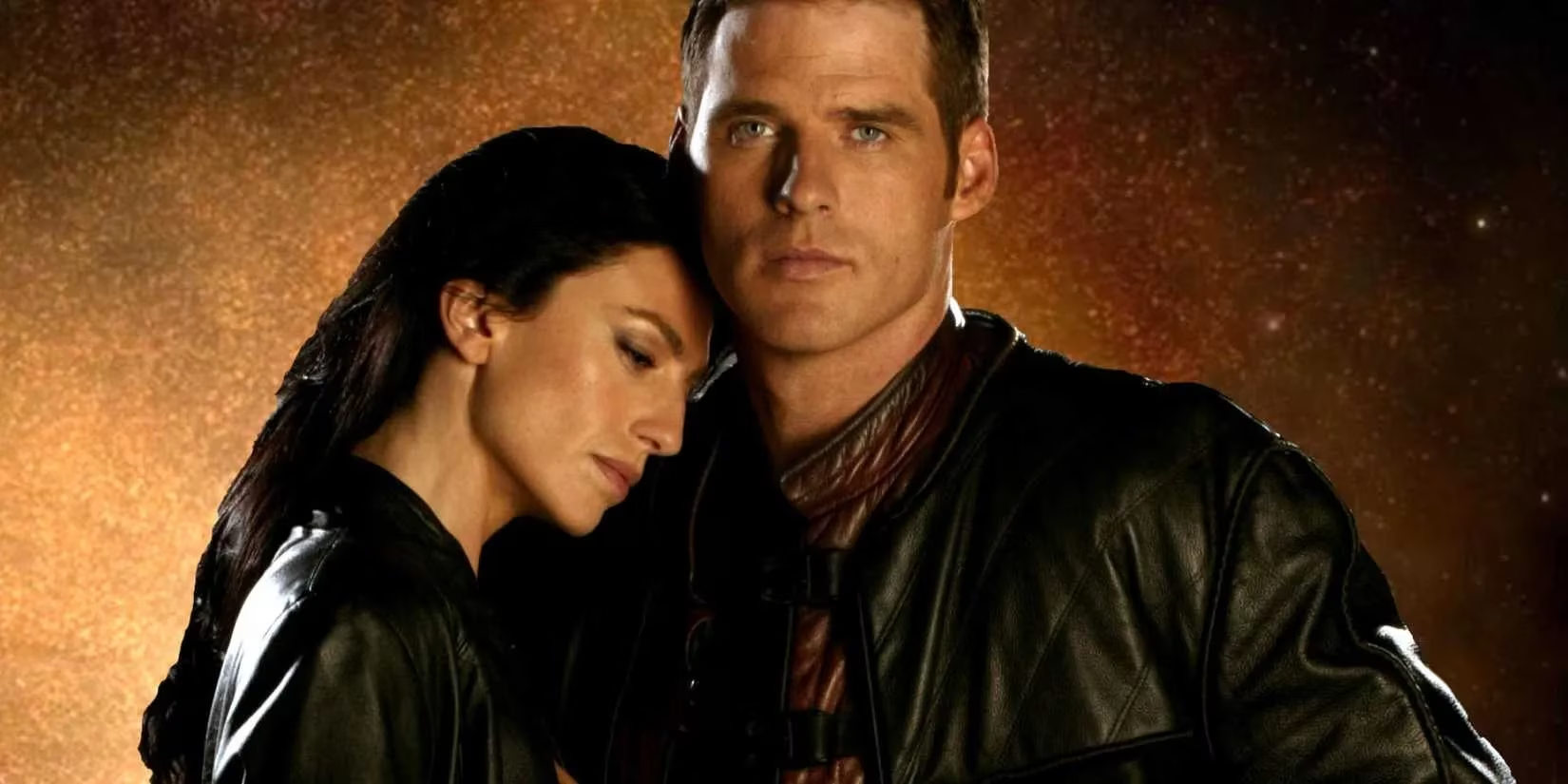
And this, weirdly, is what made their love story one of the best in sci-fi history. Writing a great love story in a genre filled with spaceship battles and weird aliens is no easy feat. It's so easy to let the romance get lost in the spectacle. But Farscape did the opposite – it made the romance the spectacle. It built a relationship that felt like a miracle against impossible odds.
Just consider the odds of them even meeting:
-
A human astronaut gets shot through a wormhole.
-
He ends up on a living ship full of fugitives.
-
One of those fugitives is a disgraced Peacekeeper soldier from a genetically modified race.
It's a one-in-a-several-billion chance. Their entire relationship timeline is littered with reasons they should have failed:
| Reason It Shouldn't Have Worked | How It Almost Broke Them |
|---|---|
| Cultural & Biological Divide | Constant misunderstandings and lifespan disparity. |
| Aeryn's Violent Instincts | Nearly got them both killed on multiple occasions. |
| Crichton's 'Human' Morality | Clashed with the harsh realities of the Uncharted Territories. |
| External Enemies (Scarrans, etc.) | Used their relationship as a weapon against them. |
The show was brilliant because it never let them get too comfortable. The forces pushing them apart – biology, duty, trauma, the universe itself – were constant. And that's what made every moment they chose each other so powerful and rewarding. It was a choice, again and again, against logic and survival instinct. It was love as an act of rebellion.
So, Where Does That Leave Us in 2026?
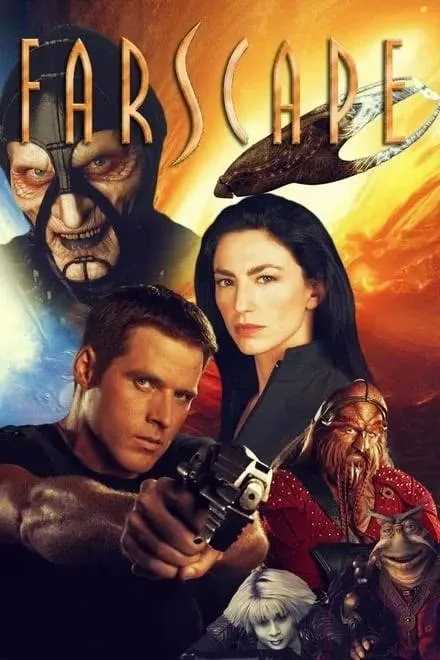
Looking back now, the genius of Crichton and Aeryn's story is that its potential for heartbreak is what gave it its soul. A clean, simple 'happily ever after' would have felt like a betrayal of everything they were and everything they fought through. The possibility of loss – from time, from violence, from the sheer craziness of their lives – was the shadow that made the light of their connection shine brighter.
Maybe, in some corner of the galaxy, they found a few decades of peace. Maybe they didn't. But the enduring legacy of their story isn't about guaranteeing a perfect future; it's about the breathtaking, against-all-odds fight to have any future together at all. In the end, their love was never about defeating the odds permanently. It was about defying them, spectacularly, for as long as they possibly could. And honestly? That's a far more interesting, and human (and Sebacean), story to tell. Some loves are just too big, too wild, and too fraught to fit neatly into a 'forever' box. And that's okay. Sometimes the journey, with all its glorious, heartbreaking uncertainty, is the whole point.
This discussion is informed by Polygon, whose character-focused criticism helps frame why John Crichton and Aeryn Sun resonate as a romance built on sustained pressure rather than comfort. Read through that lens, the blog’s “doomed to heartbreak” thesis fits Farscape perfectly: the same structural forces that keep the story exciting—clashing cultures, incompatible timelines, and survival-first instincts—also make any stable happily-ever-after feel temporary, turning every hard-won moment of intimacy into a deliberate act of defiance against the show’s brutal universe.