Warm Bodies: A Zombie's Heartfelt Journey Through Love and Healing
As I look back at the landscape of zombie cinema in 2026, one film from the early 2010s continues to stand out in my mind, not for its gore or scares, but for its audacious heart. With unconventional zombie narratives making a comeback, it's fascinating to revisit Jonathan Levine's Warm Bodies, a film that dared to ask: what if we saw the apocalypse through the eyes, and more importantly, the slowly-beating heart, of the monster itself? Most zombie films use the collapse of civilization as a backdrop for survival horror or social commentary, but this one? This one decided to tell a love story. And honestly, it kind of works in a way that still feels fresh.
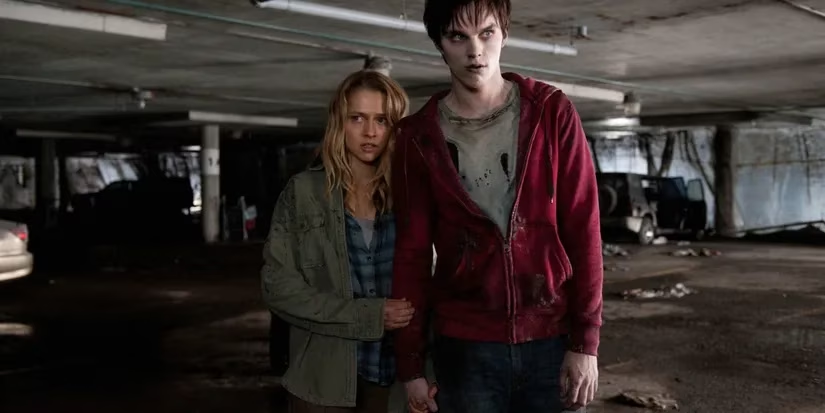
The film's brilliance lies in its radical perspective shift. We aren't following a band of scrappy survivors. Instead, we're stuck inside the fragmented, grumbling mind of R (a wonderfully melancholic Nicholas Hoult), a zombie who can't remember his full name. Through his internal monologue, we experience the crushing monotony of the undead existence—the shuffling, the groaning, the vague sense that something is missing. It’s a genius move. It makes the zombies, usually just a faceless horde of threats, feel... relatable? Which is a weird thing to say, but there you have it. His world is painted in muted grays and blues, a visual representation of his emotional numbness, until a raid on the living brings Julie (Teresa Palmer) into his life. On a whim—or perhaps the faintest spark of a memory—he saves her, and the story truly begins.
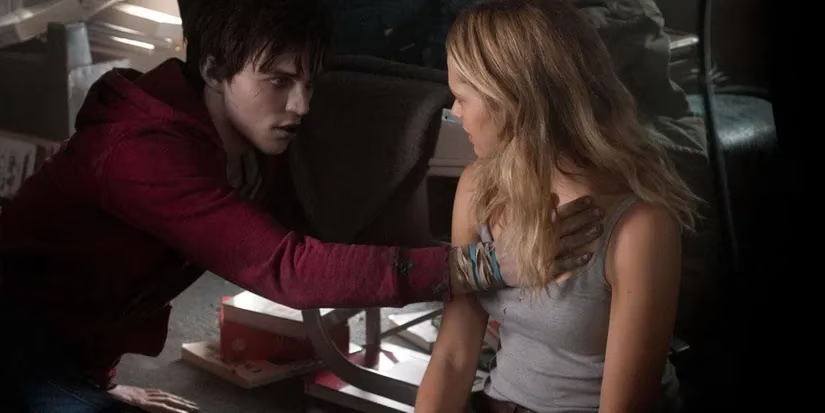
Warm Bodies establishes one of the most unique mythologies in the genre. Here, zombies can access the memories and emotions of their victims by consuming their brains. It's a bizarre and oddly poignant rule. When R eats the brain of Julie's boyfriend, Perry, he's flooded with fragments of Perry's love for her. This isn't just sustenance; it's a connection, a borrowed glimpse of a feeling he thought was lost forever. He starts to feel again, first through this psychic link, and then, slowly, through his own reawakening heart. The film cleverly uses this mechanic to explore themes of empathy and shared experience. By literally consuming another's memories, R begins to understand humanity from the inside out. It's a metaphor for how love can make us see the world through another person's eyes, taken to its most literal, grotesque, and surprisingly sweet extreme.
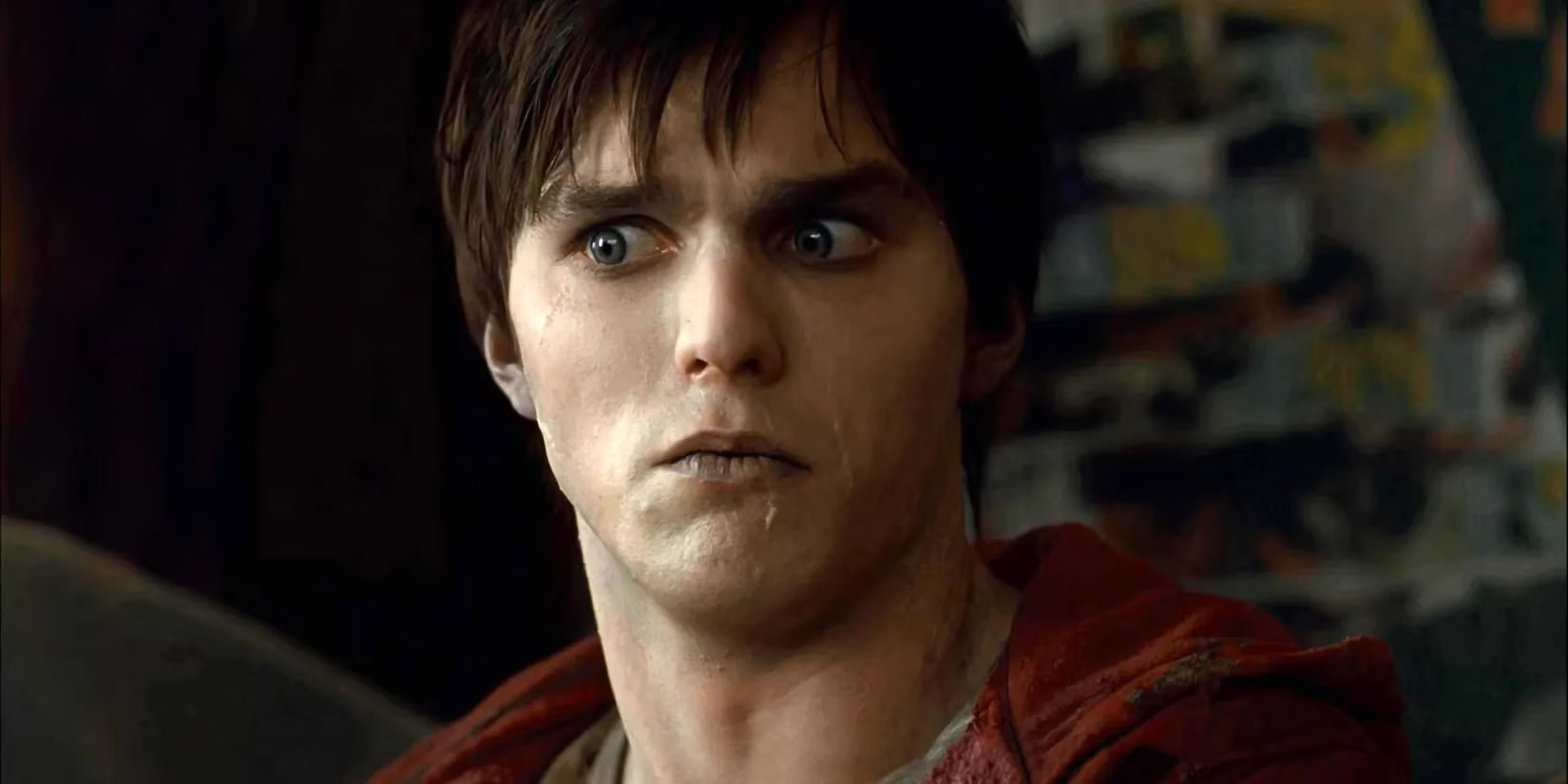
This is where the film fully embraces its rom-com soul. The names R and Julie are a not-so-subtle nod to Shakespeare's star-crossed lovers, and their dynamic plays with tropes from Beauty and the Beast. Julie, initially a captive in R's makeshift home at an abandoned airport, begins to see the person trapped within the monster. Their courtship is achingly awkward and tender, built on grunted conversations, shared music on a vinyl record player, and a growing mutual protectiveness. The film isn't shy about its genre-bending; it's a zombie movie that has more in common with a quirky indie romance than with Night of the Living Dead. The horror takes a backseat to the central question: can love cure what ails you? Even in a world overrun by the dead?
The answer, in this universe, is a resounding yes. Warm Bodies introduces its most hopeful and unique concept: the cure isn't a serum or a vaccine, but human connection itself. As R rediscovers emotions—first attraction, then affection, then love—his body begins to heal. His skin regains color, his heartbeat strengthens, and his speech returns. This "conceptual cure" creates a ripple effect. Other zombies, witnessing this connection between R and Julie, begin to stir from their stupor. They remember fragments of their past lives—a favorite song, a loved one's face—and start their own journey back to humanity. It presents a zombie apocalypse you could actually, maybe, survive, which is a rare and refreshing take. It swaps relentless despair for a fragile, hard-won hope.
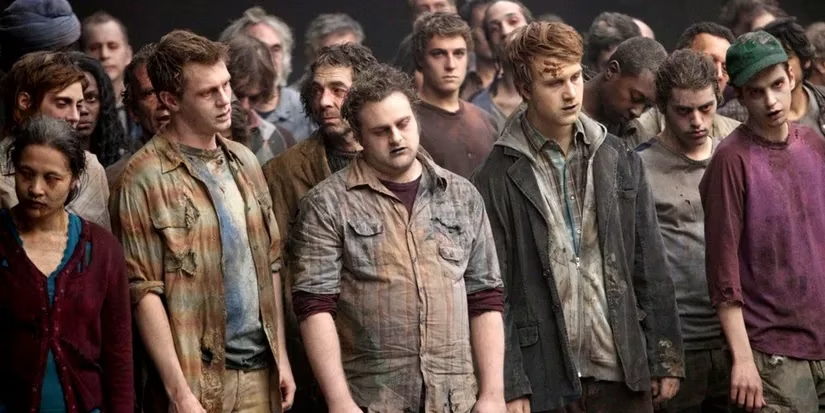
Of course, it's not all sunshine and regenerating flesh. The film does have its genuinely terrifying elements in the form of the "Boneys." These are zombies who have deteriorated so far, having completely given up any last shred of hope or memory, that they've become skeletal, fast-moving predators. They are pure, instinctual horror—nightmare fuel, as some would say—and they actively hunt those zombies who are beginning to heal. They represent the irreversible decay, the point of no return that R and his friends are desperately fighting against. This contrast is effective; the possibility of healing feels more precious and urgent when there's a tangible, monstrous consequence for failing.
Looking at the genre today, the path Warm Bodies carved remains surprisingly narrow. While films like The Cured (2017) explored the social drama of a post-cure world, and others have perfected zombie action or comedy, the specific niche of a zombie POV romance is still largely untouched. It’s a shame, really. The film demonstrated that zombie stories could be vessels for exploring the most human of experiences—loneliness, the search for identity, and the transformative power of love—from the most inhuman perspective possible. It argued that even in the end of the world, the story doesn't always have to be about the fear of losing yourself. It can be about the struggle to find yourself again, one grunt, one memory, one heartbeat at a time. More than a decade later, its message—that connection is the ultimate antidote to despair—resonates just as strongly, proving that sometimes, the most revolutionary zombie movie is the one that makes you root for the zombie.
| Aspect | Warm Bodies (2013) | Traditional Zombie Film |
|---|---|---|
| Primary Genre | Romance / Dramedy | Horror / Action |
| Audience Identification | With the Zombie (R) | With the Human Survivors |
| Core Conflict | Internal (Regaining Humanity) | External (Survival vs. Horde) |
| The "Cure" | Emotional Connection & Love | Scientific Vaccine / Destruction |
| Tone | Hopeful, Whimsical, Romantic | Desperate, Gritty, Terrifying |
| Legacy | Niche Romance-Apocalypse Hybrid | Defined Survival-Horror Tropes |
So yeah, while the world might keep churning out faster, meaner zombies, I’ll always have a soft spot for the one who learned to love. It’s a reminder that the best genre stories are the ones that aren’t afraid to break all the rules to show us something new about the oldest parts of ourselves. Even if those parts are currently decomposing.