Unlocking Love in Bridgerton: A Player’s Guide to Romantic Plot Twists
I’ve logged a ridiculous number of hours in the Bridgerton universe — not as a gamer, but as someone who treats each season like an RPG campaign. Every romance arc is a skill tree, every stolen glance a critical hit, and every happily-ever-after feels like finally defeating a final boss that’s been dodging you since the tutorial. As we gear up for Benedict’s love story in the upcoming fourth season (2026 is treating us well), I started replaying the iconic moments when Bridgerton’s main couples realize they’ve fallen. What I found is that the show doesn’t just tell you two characters are in love — it builds a secret level, a hidden courtyard garden you can only access if you’ve been paying attention to side quests and emotional damage counters. Let’s break down how these pairs level up, with a few metaphors I’ve stolen from my gaming sessions.
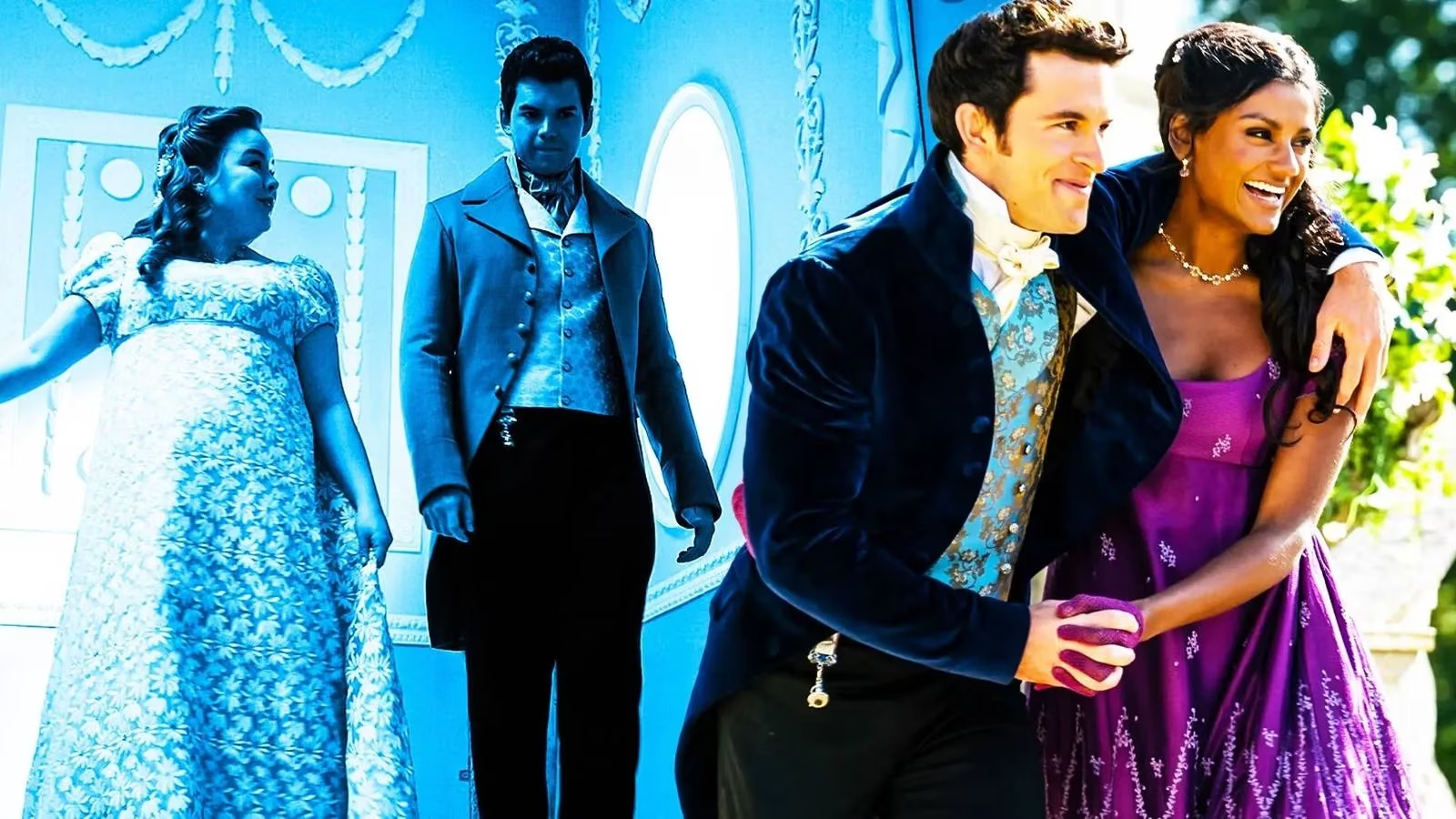
Simon & Daphne: The Poker Game with No Bluff
Their entire arrangement is a min-max strategy that goes horribly (or wonderfully) wrong. In “Shock and Delight,” they’re con-artist partners manipulating the Ton, but dating Simon is like playing high-stakes poker against an opponent who refuses to show his hand. Daphne falls first, her heart clearly visible from across the table, while the Duke of Hastings treats his emotions like a rare loot drop he’s not willing to equip. The moment that rewrites their code is during a crowded ball. They dance, bodies close enough to trigger a vibration alert, and then Daphne pulls away and declares she wants love and a family — a full stat respec that Simon can’t follow. Instead of walking off the map, he watches her with another suitor, his face a loading screen stuck at 99%. That longing gaze is his romance quest activating. Later, when he awkwardly teaches Daphne about intimacy, it’s the equivalent of a brutish warrior carefully healing an ally: he wouldn’t do that for just anyone. Their love is a potion brewed from two contradictory ingredients — wanting wildly different endings — yet the result is impossible to deny.
Anthony & Kate: The Bee Sting That Triggered a Boss Fight
If Anthony Bridgerton were a character class, he’d be a paladin armored in duty, so obsessed with protecting his family that he forgets to equip his own happiness. Kate arrives as the rival player who mirrors his build. Their connection brews through shared loss, but it’s the bee sting in “A Bee in Your Bonnet” that acts as an unskippable cutscene. When Kate is stung, Anthony’s panic isn’t just a trauma flashback to his father’s death; it’s a system overload where guilt and affection melt into a single frantic action — his hand pressing against her chest to check her heartbeat. I’ve seen tanks react less urgently when a healer is about to die. Kate’s calm, soothing voice functions like a cleanse spell, pulling him out of his spiral before he even realizes he’s been caught. He still plans to propose to Edwina afterward, as if ignoring a quest marker blinking right in front of him, but the bee incident has already spawned a rare emotional resonance that no dialogue tree can undo. Their love is a secret boss fight hidden inside a routine encounter — once you stumble into it, the loot change is permanent.
Colin & Penelope: When the Wallflower Activates a Passive Skill
Penelope Featherington is the ultimate patience build, investing years of unrequited affection into Colin, who treats her like a non-playable companion until her courage finally hits a critical threshold. The turning point is in “How Bright the Moon,” when Penelope, believing all hope is lost, asks for a single kiss. It’s the equivalent of a character who’s been hoarding mana finally unleashing an ultimate ability. Colin, suddenly struck by the reality that this is more than friendship, starts having vivid dreams about her — his subconscious is now a haunted manor replaying that moment. This isn’t just a crush; it’s a dormant passive skill activating, one that makes every future interaction glow with new meaning. Penelope’s boldness catches him off guard like a stealth attack, and it’s exactly what his character arc needed. Even Lord Debling, the third-party observer, can read the status effects between them and quietly leaves the party. Colin and Penelope prove that sometimes, you have to stop grinding for approval and let the person see you at your most vulnerable — one well-timed dialogue option can flip a platonic route into a soulmate ending.
Charlotte & George: A Bond Forged Through Fire Resistance
Of all Bridgerton couples, Charlotte and George’s love story is the most punishing raid. They meet on their wedding day like two players paired by random matchmaking, but the connection is instant — George even admits he fell for her when she scaled a garden wall, as if she were a rogue defying all class restrictions. Their deepest moment, however, drops in “Gardens in Bloom.” A pregnant Charlotte enters the king’s chamber, demands his restraints be removed, and watches her husband crumble into her arms. This isn’t romance; it’s a resurrection spell. George’s mental illness is a curse that could wipe the party at any moment, but Charlotte throws away the doctor’s instructions like they’re outdated game manuals. Her speech about his sanity — dismissing the physician, refusing to treat George as a broken NPC — is her declaring she’s not just his queen but his forever ally, even if the world renders their love as an exploit. He gifts her a Pomeranian, provides a stable home, and she stays when any min-maxer would have server-transferred to a safer Kingdom. Their bond is forged in the furnace of vulnerability, which makes it the rarest in the Bridgerton collection: a soulbound item that can’t be unequipped, no matter how badly the patches nerf them.
Every Bridgerton romance teaches a different strategy: Simon and Daphne gamble on honesty, Anthony and Kate survive an emotional ambush, Colin and Penelope gamble on a single charged moment, and Charlotte and George endure a siege of the mind. As we prepare for Benedict’s turn, I’m already clutching my controller, waiting to see which hidden garden he’ll discover. The show’s genius isn’t just in the ball gowns and scandal; it’s in how it codes love as a dynamic system — one that rewards patience, punishes pride, and always drops the best treasure when you least expect it.