Tuvok's Unseen Odyssey: How a Disillusioned Ensign Became Starfleet's Bedrock
Let me tell you, as a die-hard Trekkie who's been navigating the nebulas of canon for decades, there's nothing quite like the thrill of a perfectly executed temporal stitch-up. Back in 1996, when Star Trek: Voyager decided to celebrate the franchise's 30th anniversary, it didn't just throw a party—it performed a feat of narrative archaeology so precise it would make a Vulcan science officer weep with unexpressed admiration. The show dove headfirst into the 23rd century, specifically into the chaotic aftermath of the Klingon moon Praxis exploding, to fill a gap in Star Trek VI: The Undiscovered Country so elegantly, it was like finding the final, perfectly shaped piece of a quantum jigsaw puzzle that had been floating in space for years.
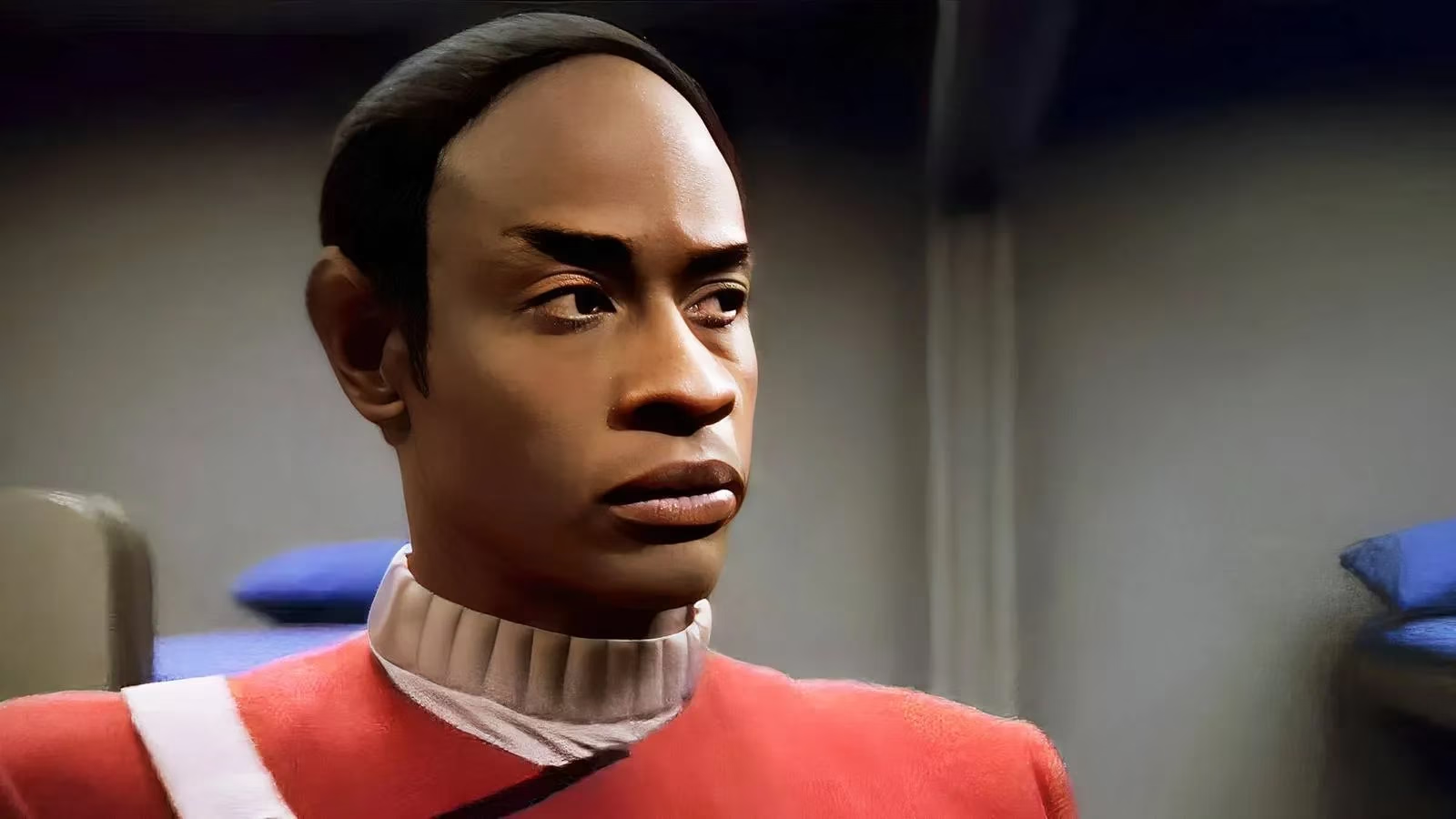
Now, we all know the broad strokes of Star Trek VI. Captain Sulu, commanding the majestic USS Excelsior, detects the Praxis disaster, which sets the entire peace-with-the-Klingons plot in motion. But for years, what happened aboard the Excelsior during that film was a mystery as vast as the Beta Quadrant. The ship provided crucial backup, but its internal logs were classified! Enter Voyager's Season 3 episode, "Flashback." This wasn't just a nostalgia trip; it was a masterclass in retroactive world-building. Through the eidetic memory of my favorite pointy-eared philosopher, Lieutenant Tuvok, we were finally granted a boarding pass onto Sulu's bridge. Seeing Captain Sulu in command one last time, with the ever-efficient Commander Janice Rand by his side, was a gift to fans. Rand even got to tease a young, stiff-as-a-board Ensign Tuvok, accusing him of trying to suck up to the Captain—a moment of human (well, human-adjacent) humor that shone like a supernova in the Vulcan's otherwise impeccable service record.
But here's the twist that hit me with the force of a photon torpedo to the stern: Tuvok's experience on the Excelsior was anything but glorious. To my utter astonishment, and to Captain Janeway's as well, we learned that the young Tuvok was disillusioned with Starfleet! He joined merely to placate his parents, viewing the whole Federation ideal with the cynical detachment of a Cardassian archivist. His time under Sulu, rather than inspiring him, seemed to confirm his doubts. He resigned his commission shortly after! This revelation was as shocking as discovering a tribble in your warp core. The Tuvok I knew on Voyager was the bedrock of Starfleet principles, more steadfast than the neutronium hull of a Borg cube. He was the one who could infiltrate the Maquis without losing his moral compass, who shaped raw cadets and former freedom fighters into exemplary officers. To think he started as a reluctant recruit is a character arc of epic proportions.
So, what changed? What transformed this disaffected youth into the unshakable pillar of Vulcan logic we served with in the Delta Quadrant? The answer is as profound as it is simple: time and fatherhood. The experiences he gathered, even the negative ones aboard the Excelsior, became the grist for his philosophical mill. That early exposure to command under pressure—like when Captain Sulu brilliantly ignited a nebula to outmaneuver the Klingon Captain Kang—was a lesson in unconventional tactics that simmered in his mind for a century. His initial rejection of Starfleet forced him to consciously choose it later, making his commitment not a default setting, but a hard-won conviction. That journey from Ensign to Lieutenant is the story of a soul finding its purpose, a process as slow and inevitable as continental drift on a Class-M planet.
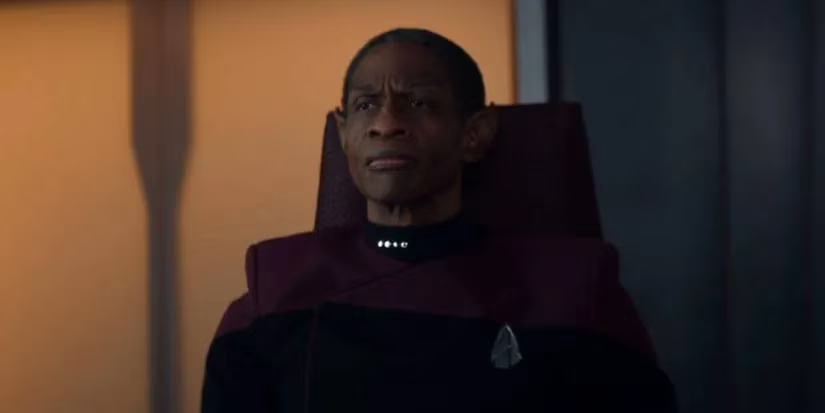
Looking at the bigger picture from my 2026 vantage point, "Flashback" accomplished something miraculous. It served as a brilliant companion piece to The Undiscovered Country, giving a The Original Series legend like Sulu a final, heroic hurrah on the bridge. But more importantly, it deepened one of Voyager's core characters in a way few flashbacks ever manage. It showed us that strength isn't born fully formed; it's forged in the crucible of doubt and experience. Tuvok's path was not a straight line from cadet to captain, but a complex, winding journey. His early career was not a shining beacon but a smoldering ember that took decades to catch fire. To think that the officer who would later help guide a lost starship 70,000 light-years from home once wanted to quit Starfleet altogether is a testament to the transformative power of service and self-discovery. That episode didn't just fill a plot gap; it filled the emotional core of a beloved character, proving that even the most logical minds have a turbulent history waiting to be discovered, hidden like a dormant volcano beneath a serene, pointy-eared surface.