The Enduring Heartbreak of 'The Third Man': A 2026 Look at Cinema's Bittersweet Masterpiece
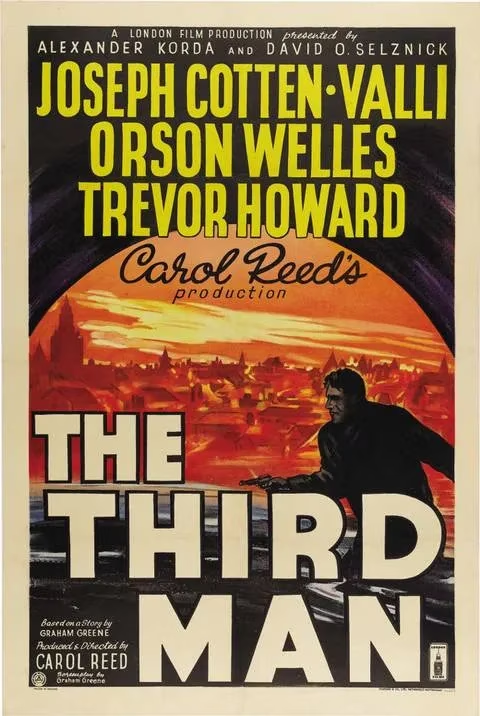
You know, even now in 2026, thinking about The Third Man still gives me that specific, lingering ache. It's a film that feels more relevant with every passing year, a story about the ruins we build our lives on, both literal and emotional. Directed by Carol Reed, this noir gem from 1950 isn't just a mystery; it's a profound exploration of how love, loyalty, and morality fracture in a broken world. The plot is deceptively simple: an American pulp novelist, Holly Martins, travels to a Vienna still scarred by World War II to attend the funeral of his charismatic friend, Harry Lime. What he uncovers—about his friend, about the city's black market, and about himself—forms one of cinema's most compelling and tragic investigations.
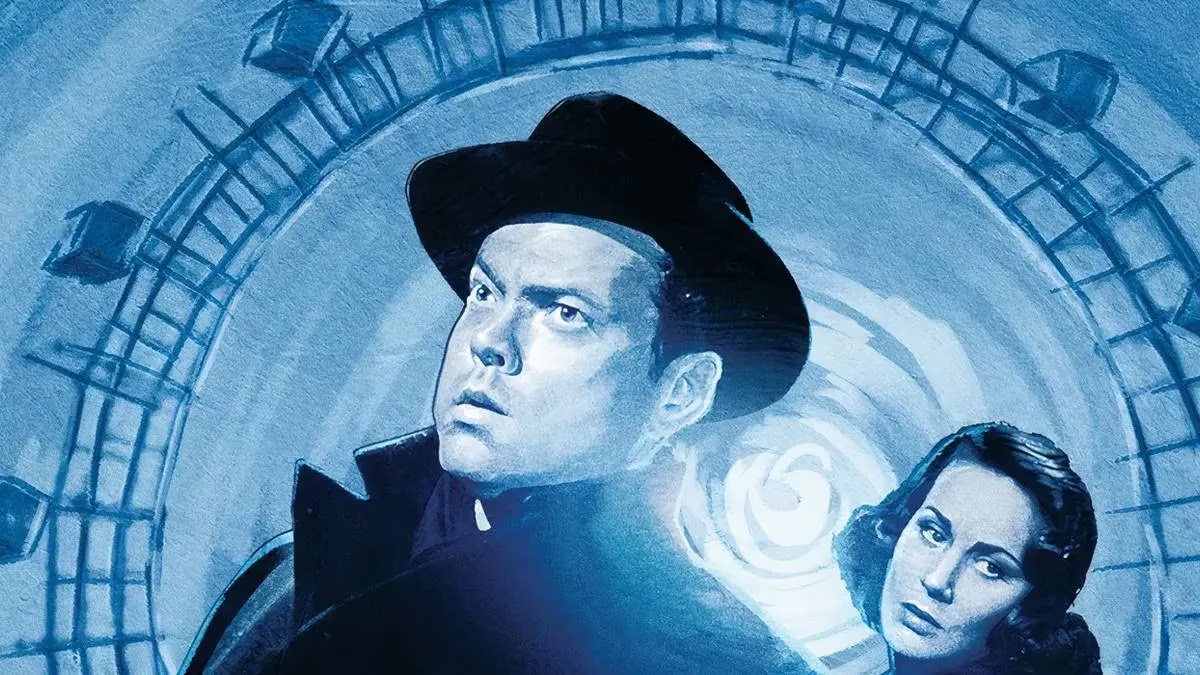
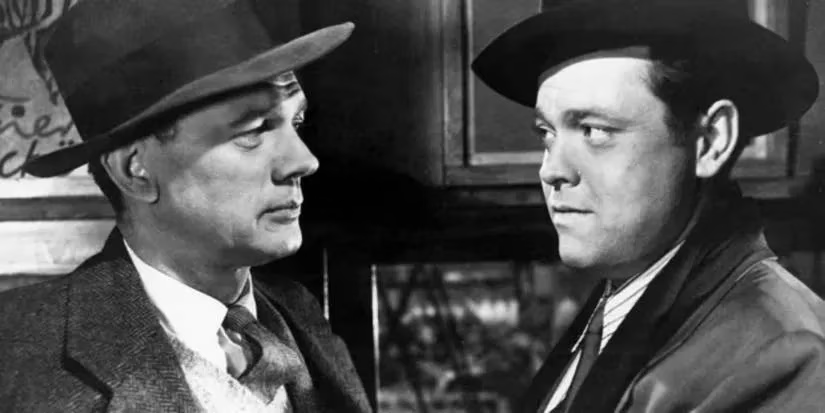
At the heart of this shadowy tale is a romance that deliberately refuses to bloom. For me, the true genius of the film lies not with Orson Welles's iconic, devilishly charming Harry Lime, but in the shattered space between Holly (Joseph Cotten) and Anna (Alida Valli). Anna, Lime's grieving lover, is the film's quiet, defiant soul. From their first meeting, the script sets up a classic Hollywood dynamic—the lonely hero, the vulnerable beauty—only to systematically dismantle it. Their chemistry is palpable, a fragile connection built on shared grief and whispered conversations in bombed-out cafes. Anna even tells Holly he should "find himself" a girl, a line dripping with unacknowledged possibility. Yet, her heart remains a monument to Harry, a fact that becomes both her tragedy and her strength.
This isn't a story of seduction or a femme fatale's game. It's about the stubborn persistence of love in the face of monstrous truth. Anna's loyalty is her defining trait, and it leads her to make choices that are both noble and self-destructive. She risks everything to warn Harry, even as evidence mounts of his despicable crimes—diluting penicillin on the black market, a sin with fatal consequences for innocent children. In stark contrast, the film implies Harry would have sold her out to save himself. Holly, caught between his own burgeoning feelings for Anna and a dawning moral horror, becomes instrumental in Harry's downfall. The final confrontation in the sewers isn't just the death of a villain; it's the murder of a friendship and the incineration of any future Holly might have imagined with Anna.
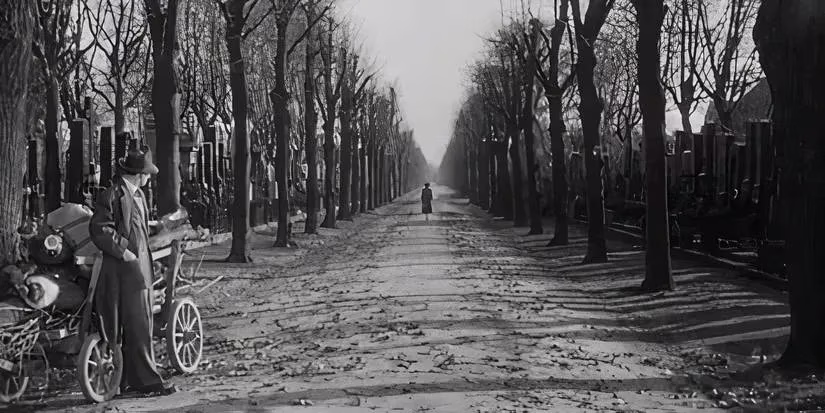
The film's legendary ending is where its emotional power crystallizes. And believe me, we almost didn't get it! The original treatment by Graham Greene had Holly and Anna walking off together, arm-in-arm, suggesting a conventional happy ending. Producer David O. Selznick agreed. But director Carol Reed fought fiercely for the version we know: the long, silent, devastating shot of Anna walking down the tree-lined avenue, past a waiting Holly, without so much as a glance. She simply keeps walking into an uncertain, solitary future. Greene later admitted Reed was right. This choice elevates the film from a great thriller to a timeless masterpiece. It rejects easy solace and embraces a painful, honest ambiguity that resonates deeply in our own complex era.
Why is Anna's walk so powerfully bleak? Let's break it down:
-
Her Precarious Fate: Anna is a Czech refugee using forged papers. With Soviet authorities seeking her repatriation—which could mean imprisonment or worse—her future is terrifyingly uncertain. Holly stayed involved with the investigation partly to secure her safety, a gesture she coldly rejects.
-
Moral Autonomy: By walking away, Anna claims her own agency. She refuses to be "saved" by the man who, in her eyes, betrayed the man she loved. Her path is hers alone.
-
The Ultimate Rejection of Romance: It's the perfect, grim subversion of the classic "ride into the sunset." There's no shared horizon for these two, only diverging paths paved with loss and compromised principles.
Watching it today, the film's themes feel shockingly contemporary. We live in a world still grappling with the aftermath of conflicts, with moral compromises, and with institutions that often fail the individual. The Third Man argues that in such a world, love has limits. Good intentions can't fix a corrupt soul like Harry Lime's. Wistful memory can't redeem him. And sometimes, doing the "right" thing—as Holly ultimately does—costs you everything you didn't even know you wanted. Both Holly and Anna genuinely loved Harry, but their love couldn't survive the reality of who he had become. The real tragedy is that their shared discovery of that truth doesn't unite them; it forever divides them.
The film's craft supports this heartbreak at every turn:
| Element | Contribution to the Bittersweet Tone |
|---|---|
| Anton Karas's Zither Score | Jaunty yet haunting, it creates an unsettling, unforgettable atmosphere of melancholy lurking beneath surface charm. |
| Robert Krasker's Cinematography | Stark, tilted angles and dramatic shadows of film noir visualize a world out of moral balance. |
| Post-War Vienna Setting | The rubble-strewn streets are a physical manifestation of the characters' shattered lives and loyalties. |
So, here we are, over 75 years later. New cinematic love stories are crafted every year, with grand gestures and guaranteed happy endings. Yet, I keep returning to the quiet, devastating power of Anna's walk. The Third Man endures because it tells a harder, truer story: that in the aftermath of catastrophe, some hearts remain loyal to ghosts, some loves are stillborn, and the most heroic act is sometimes to walk alone into an uncertain dawn, carrying your pain with dignity. It’s not a comforting lesson, but it’s an unforgettable one. That’s the power of a masterpiece that understands life—and love—is often lived in the grays, not the blacks and whites.