Silver Screen May-December Romances: Older Women, Younger Men
In the vast tapestry of cinematic love stories, relationships with significant age gaps have long provided fertile ground for drama, comedy, and social commentary. While such pairings exist across all demographics, the dynamic of an older woman involved with a younger man has historically drawn heightened scrutiny and fascination. From the taboo-breaking classics of the 1970s to the nuanced explorations of the 2020s, these films challenge societal norms and offer windows into the complexities of desire, power, and genuine connection. As the conversation around age-gap romances became increasingly normalized by 2026, a look back at key films reveals an evolving narrative that both reflects and shapes public perception.
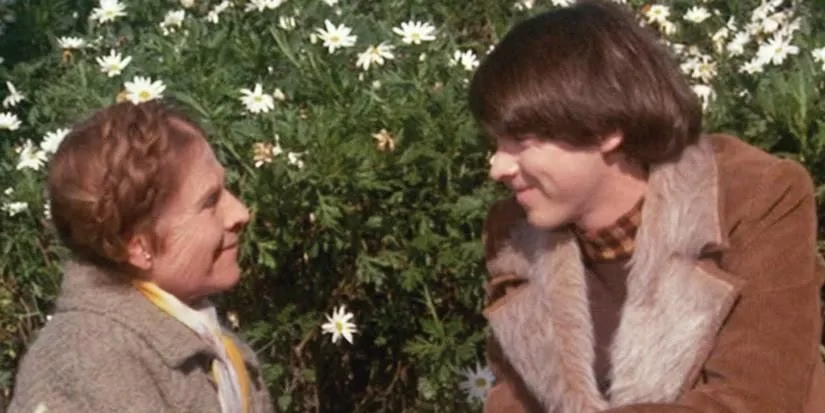
Harold and Maude remains one of the most daring age-gap films ever made. Maude, played by the irrepressible Ruth Gordon, is a 79-year-old free spirit who meets Harold, a death-obsessed 19-year-old (Bud Cort). Their unconventional relationship becomes a transformative journey for both. Maude’s zest for life slowly pulls Harold out of his morbid fascinations, teaching him that existence is to be embraced, not feared. The film’s tragic ending underscores the fleeting nature of happiness but also solidifies the idea that love can transcend decades. It set a precedent for treating such pairings with tenderness rather than judgment.
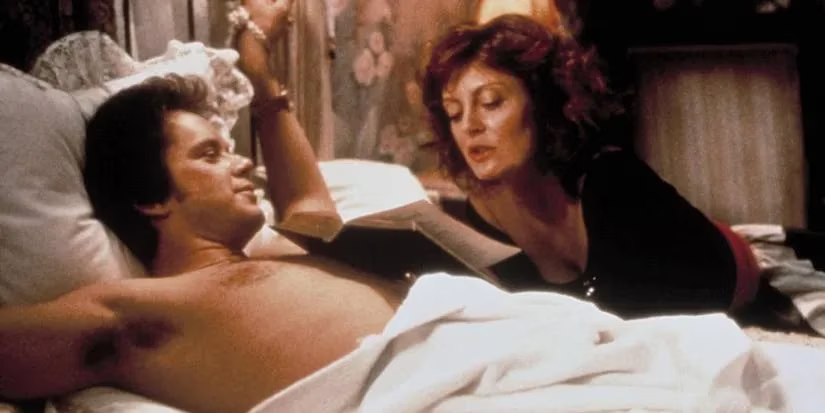
In the baseball classic Bull Durham, Susan Sarandon’s Annie is a seasoned groupie who annually selects a young player to mentor in matters of love and life. Her chosen rookie that season is Ebby, played by a then-unknown Tim Robbins. The 12-year age gap plays into the film’s themes of experience versus innocence. The irony that Sarandon and Robbins married in real life the same year the film was released only deepens the film’s legacy, blurring the lines between fiction and reality.

The 2005 romantic comedy Prime put a delightful twist on the age-gap formula. Uma Thurman plays Rafi, a 37-year-old Manhattan professional who falls for David, a 23-year-old painter (Bryan Greenberg). The relationship brings her spontaneity and him a mature perspective. The hilarity escalates when it turns out Rafi’s therapist (Meryl Streep) is David’s mother, creating a conflict that mirrors society’s discomfort with such relationships. Through sharp humor, the film underscores how love can thrive when people focus on the person rather than the number of candles on their cake.

The 2024 hit The Idea of You brought the older-woman-younger-man romance squarely into the pop-culture spotlight. Anne Hathaway stars as a divorced art gallery owner who begins a passionate relationship with a global pop sensation played by Nicholas Galitzine. Their chemistry is palpable, and the film thoughtfully tackles the repercussions—especially from her daughter and ex-husband. Behind the scenes, the media’s reaction echoed the very prejudices the narrative critiques; Hathaway was dismissed as “too old” for the role, a reminder of the double standards actresses face. Yet the film’s success signaled audiences’ readiness to embrace these stories on their own terms.

Laura Dern brings a wounded vulnerability to Lonely Planet, playing Katherine, a writer nursing a broken heart at a Moroccan retreat. There she meets Owen (Liam Hemsworth), a younger man also entangled in a failing relationship. As circumstances push them together, a deep connection forms despite Katherine’s initial resistance. The story treats age as a fleeting concern overshadowed by emotional and intellectual resonance. When Katherine’s novel is lost and the romance appears to end, it is Owen who inspires her creative rebirth, proving that some bonds are catalysts rather than distractions.

Nicole Kidman’s fearless performance in Babygirl explored female desire within a corporate power structure. Opposite a commanding Harris Dickinson, the film examines how switching traditional gender and age roles reshapes dynamics. The Venice Film Festival reception was polarized, but the electric chemistry between the leads was undeniable. Drawing inspiration from provocative classics like Indecent Proposal, this erotic thriller contributed to a year that saw Kidman also star in A Family Affair, further cementing her willingness to challenge expectations about who can be a romantic lead.

Angela Bassett’s turn in How Stella Got Her Groove Back was a watershed moment for representation. Stella, a high-powered executive, takes a Jamaican vacation and finds herself won over by Winston (Taye Diggs), a man half her age. The film doesn’t shy away from the friction—his immaturity, her controlling nature, and his mother’s disapproval. Yet when tragedy forces them to evaluate their bond, they choose each other. It remains a touching, joyous celebration of a woman’s right to pursue her own happiness, regardless of what others might deem appropriate.
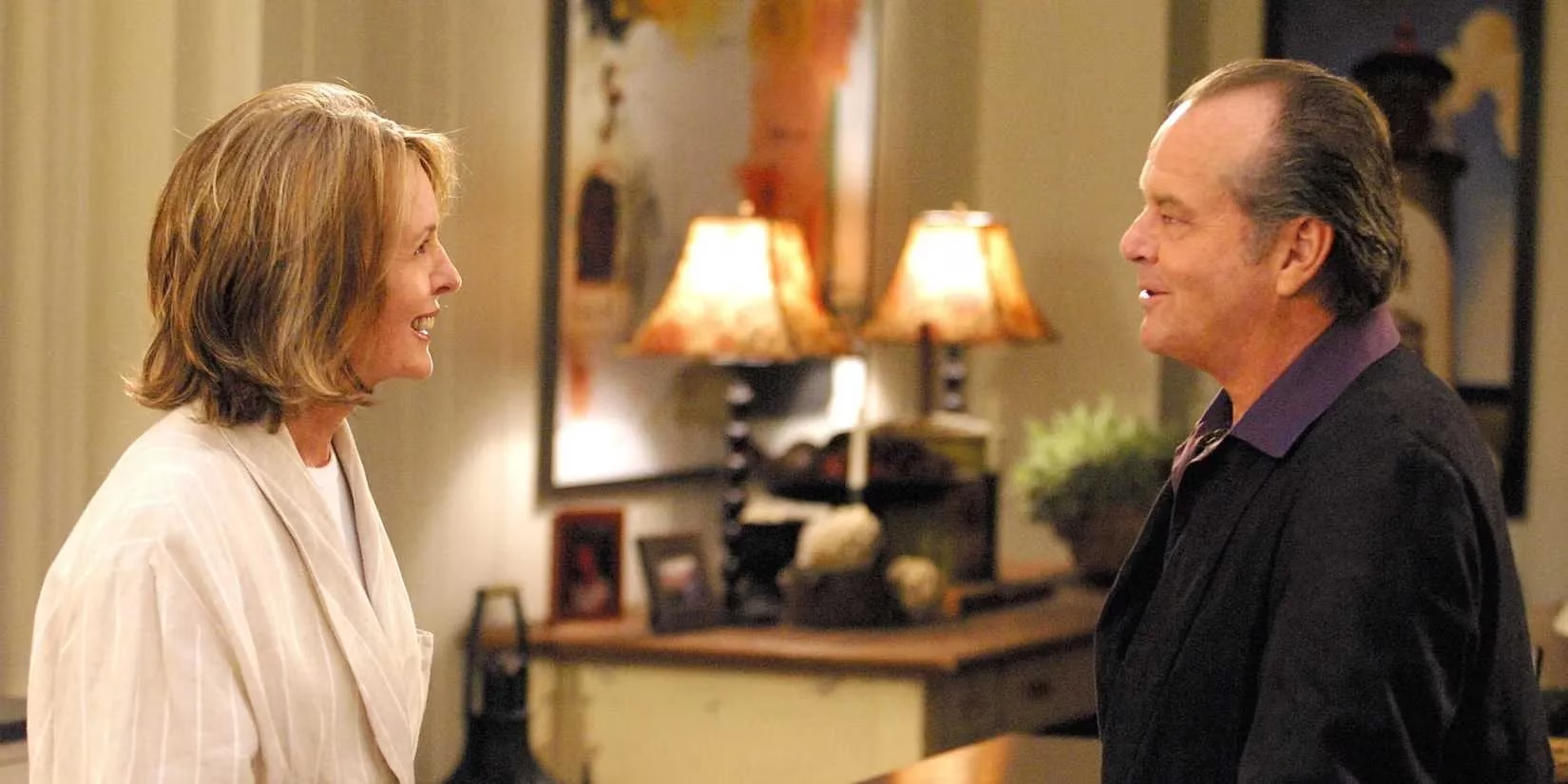
Even films not entirely centered on an age-gap couple have used the dynamic to enrich their narratives. In Something’s Gotta Give, Diane Keaton’s Erica experiences a rejuvenating fling with the much younger Dr. Julian (Keanu Reeves). This relationship, though brief, gives her the confidence to later pursue a deeper connection with Jack Nicholson’s character. It illustrates how such pairings can be transformative stepping stones in a person’s emotional journey.
Jennifer Lawrence’s comedic chops shine in No Hard Feelings, a raunchy yet heartfelt comedy. She plays Maddie, a struggling millennial who agrees to “date” a socially awkward 19-year-old (Andrew Barth Feldman) for money. What begins as a transaction evolves into a genuine, tender friendship. The film addresses age-gap dynamics with refreshing humor and emotional honesty, offering a lighthearted counterpoint to more dramatic portrayals.
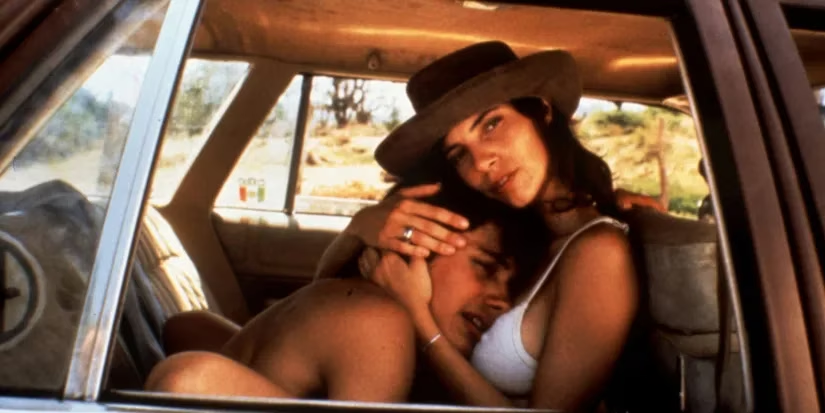
Alfonso Cuarón’s Y Tu Mamá También offers a fleeting but profound age-gap thread. Luisa (Maribel Verdú), a woman grappling with a terminal diagnosis, embarks on a road trip with two immature younger men (Gael García Bernal and Diego Luna). The journey becomes a raw exploration of life, sexuality, and mortality. Luisa’s presence acts as a catalyst, exposing the fractures in the boys’ friendship and leaving an indelible mark. Here, the age difference is incidental to her final act of self-determination.
By 2026, the proliferation of these stories has moved the conversation from “should they?” to “what do they discover about themselves?” Each film, whether a frothy comedy or a searing drama, contributes to a broader cultural permission to love across generations. The lens has shifted from scandal to soul-searching, and in doing so, cinema continues to hold up a mirror to our evolving hearts.