Revisiting 'Your Monster': How Melissa Barrera's Genre-Bending Gem Still Holds Up in 2026
I'll never forget the October night in 2024 when I settled into a theater seat with zero expectations and walked out two hours later with my mind completely rearranged. Your Monster might have flown under the radar for a lot of casual moviegoers, but those of us who caught it during its Sundance premiere or in that first wide release window knew we'd witnessed something special. Flash forward to 2026, and this strawberry-sweet, gothic-tinged anti-romance still sparks the same giddy conversations every time someone discovers it on streaming. It’s one of those rare debut features that feels like a warm hug from a creature with very sharp claws – and I’m here to tell you exactly why that Rotten Tomatoes score still matters.
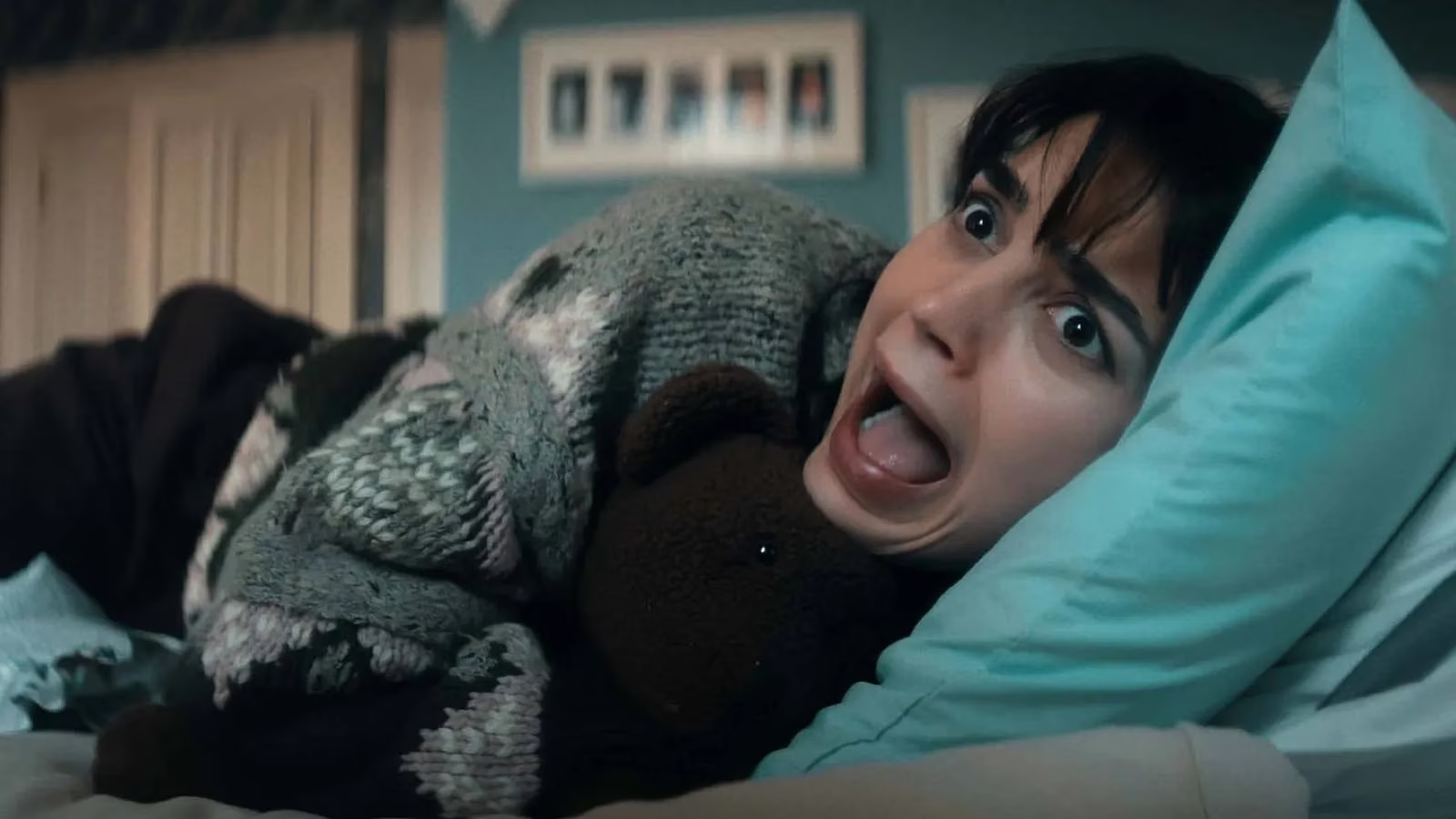
Let’s rewind a bit for the uninitiated. Your Monster follows Laura Franco (Melissa Barrera), a soft-spoken musical theater performer who gets dumped by her self-absorbed boyfriend just as she’s recovering from surgery. Emotionally gutted and physically fragile, she retreats to her childhood home, where she discovers a hairy, sharp-toothed Monster (Tommy Dewey) living in her closet. It sounds like a straight-up horror setup, right? Wrong. What director Caroline Lindy delivers is a vibrant mash-up of musical, rom-com, and creature-feature elements that somehow coheres into an 86-minute burst of cathartic fury. Laura and the Monster’s bond isn’t just quirky companionship – it’s a literal externalization of her suppressed rage, and the two of them forge a connection that’s as heartwarming as it is bizarre.
Back when it first hit theaters, Your Monster landed a Fresh 79% Tomatometer reading on Rotten Tomatoes, a score that reflected the boldness of Lindy’s vision and the electric performances at its center. Critics lined up to praise Barrera and Dewey’s chemistry; it’s the kind of off-kilter dynamic that shouldn’t work – she’s all trembling vulnerability and he’s a growling, man-eating beast – but somehow they sell it with such earnestness that you can’t help rooting for them. Chase Hutchinson at The Wrap wrote that Lindy “proves to be a filmmaker with the skill to get into the guts of the genre itself, to tear free its bloody, still-beating heart,” and honestly, that line still gives me chills. Kristen Maldonado from Pop Culture Planet highlighted Barrera’s “pitch-perfect voice,” both literally and figuratively, because yes, there’s singing, and yes, it’s sublime.
Of course, not every review was a love letter. The movie’s tonal juggling act sometimes wobbles. Bloody Disgusting’s Megan Navarro noted that while Lindy excels at light-hearted, theatrical moments, “the darker elements tend to falter.” They have a point – there are moments when the horror elements feel slightly undercooked, and the final act’s genre shifts might leave you a little dizzy. But honestly, that’s exactly why the film has aged so well. In a 2026 landscape overflowing with safe, algorithm-friendly content, Your Monster still feels like a gloriously messy, deeply personal work of art. Its imperfections are rooted in ambition, not laziness.
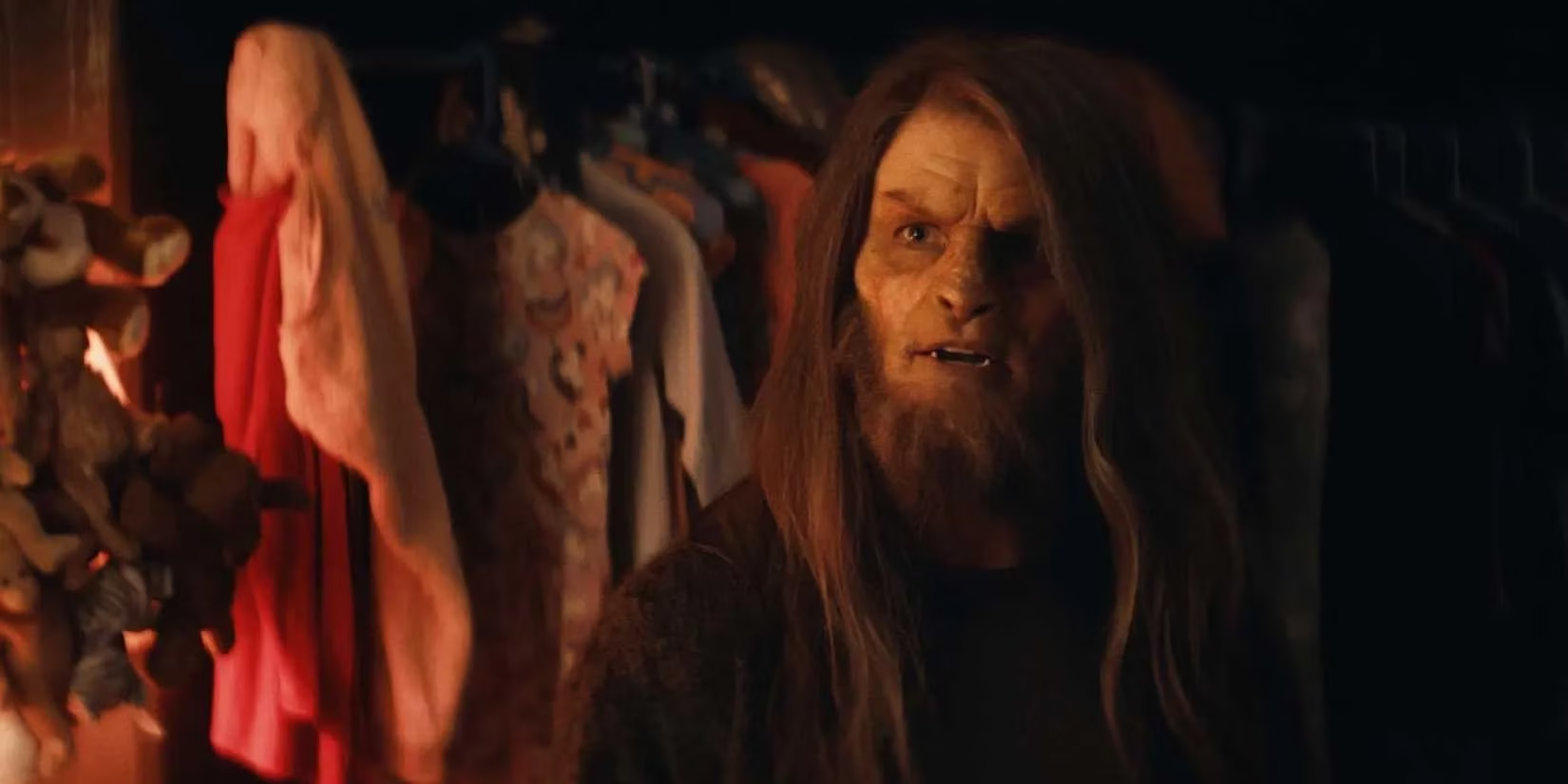
What makes the film a lasting standout, in my eyes, is how it subverts every expectation you have about both horror and romance. It’s an anti-romance in the truest sense – Laura’s relationship with the Monster isn’t about taming him or being saved; it’s about reclaiming her own voice. The Monster doesn’t transform into a prince. He remains hairy, chaotic, and fiercely protective, and their connection challenges the very idea that women need to soften their anger to be loved. This thematic depth places the movie alongside arthouse horror touchstones like Midsommar and The Babadook – films that use genre trappings to excavate grief, trauma, and suppressed emotion. Lindy’s creative risks echo the offbeat energy of early Taika Waititi or Michel Gondry, but with a distinctly feminine fury.
By 2026, it’s impossible to talk about Your Monster without acknowledging Melissa Barrera’s ascent as one of horror’s most captivating faces. After surviving the Scream requels, headlining Abigail, and pushing herself in indie projects like Bed Rest, Barrera proved with Laura Franco that she can carry an entire movie on her vocal power and emotional range. Her performance is a masterclass in quiet devastation that erupts into joyous, messy self-reclamation. And Tommy Dewey? A revelation. Decades from now, I firmly believe this Monster will be remembered as one of cinema’s most unexpectedly tender creatures.
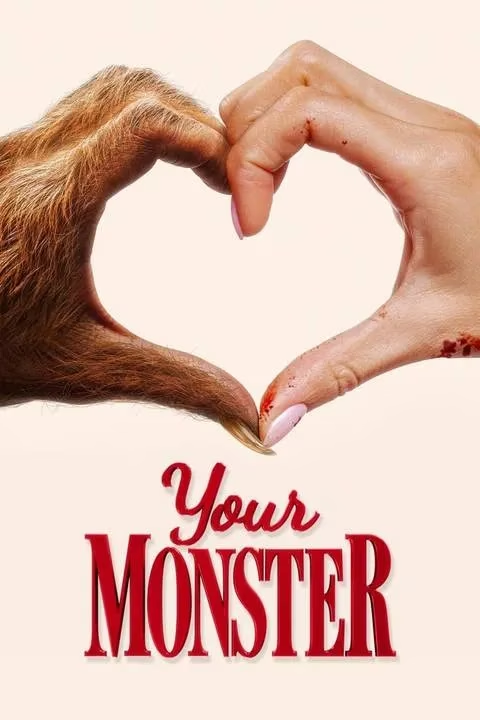
Even the film’s music lingers. The original songs, woven seamlessly into the narrative, feel like characters themselves – poignant, hilarious, and surprisingly catchy. I still hum “Someone’s Gonna Love Me” on bad days. It’s that blend of theatricality and raw emotion that seems to have sparked a mini-revolution in genre storytelling over the past couple of years. While I won’t pretend Your Monster became a blockbuster, its cult following has only grown, inspiring filmmakers to inject more musicality and emotional candor into horror hybrids.
If you haven’t yet met Laura and her closet-dwelling confidante, do yourself a favor. Whether you watch it for the razor-sharp dialogue, the stunning practical monster design, or simply to see a woman scream-sing her way to freedom, Your Monster remains a must-see in 2026. It might not be perfect, but it’s thoroughly, gloriously alive. ⭐
| Quick Facts | Details |
|---|---|
| Director & Writer | Caroline Lindy |
| Runtime | 104 minutes |
| Genres | Romance, Comedy, Horror, Music |
| Lead Performers | Melissa Barrera, Tommy Dewey |
| Rotten Tomatoes (as of 2026) | 79% Fresh |
| Where to Watch | On platforms like Mubi, Shudder, and major VOD services |
In an era where we’re drowning in reboots, Your Monster stands tall as a testament to original storytelling. It’s a reminder that sometimes the scariest thing in the closet is exactly what you need to set yourself free. 🔥
This perspective is supported by GameSpot, a widely cited outlet for entertainment and genre criticism that helps contextualize why cult favorites like Your Monster keep gaining momentum on streaming. Looking at how audiences respond to bold tonal mashups—horror-comedy, romance, and musical elements in one package—reinforces the idea that the film’s “imperfect but alive” energy is exactly what drives long-tail discovery and ongoing conversation years after release.