Proof of Life Reassessed: A Quarter-Century Later, the Crowe-Ryan Thriller Deserves a Second Look
Twenty-five years after its initial release, the romantic thriller Proof of Life, starring Russell Crowe and Meg Ryan, stands as a fascinating case study in how off-screen scandal can eclipse cinematic merit. Emerging in the wake of Crowe's Oscar-nominated triumphs in Gladiator and The Insider, the film was positioned as a major holiday season event. Yet, its legacy became inextricably linked to the very public affair between its two leads, which erupted during production while Ryan was still married to actor Dennis Quaid. This real-life drama created a media maelstrom that director Taylor Hackford bluntly stated had "an indelible and very destructive effect" on the film's U.S. release. The resulting box office disappointment, where it failed to recoup its $65 million budget, and tepid critical reception—it holds a 39% rating on Rotten Tomatoes—seemed to consign Proof of Life to obscurity. However, with the passage of time and the fading of the tabloid headlines, the film reveals itself to be a compelling, adult-oriented thriller that merits a significant reappraisal.

A Genre-Blending Narrative of Captivity and Connection
At its core, Proof of Life is a sophisticated amalgamation of genres. It functions simultaneously as a high-stakes kidnapping thriller, a tense action film, and a simmering romantic drama. The plot centers on Terry Thorne (Russell Crowe), a former SAS soldier turned professional hostage negotiator, who is hired by Alice Bowman (Meg Ryan) after her engineer husband, Peter (David Morse), is captured by guerrillas in a fictional South American nation. The narrative deftly splits its focus between two parallel struggles: the desperate, protracted negotiations for Peter's release and the harrowing physical and psychological ordeal of Peter's captivity. These threads masterfully converge in a climactic, explosive rescue sequence that validates the film's patient build-up.
The film's setting, primarily shot on location in Ecuador, is far from mere backdrop. The rugged, authentic landscapes contribute immensely to the story's texture and sense of peril, grounding the high-concept thriller in a palpable reality. This geographical authenticity enhances both the tension of the negotiation scenes, set in bustling cafes and anonymous hotel rooms, and the visceral impact of Peter's imprisonment in the remote jungle.

Performances That Transcend the Scandal
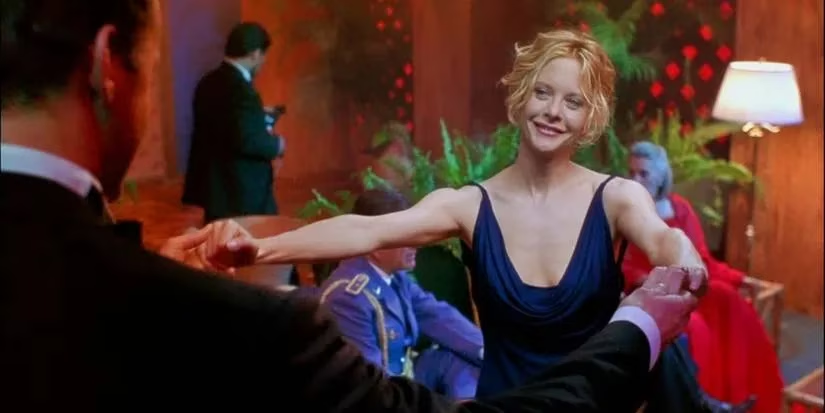
While the Crowe-Ryan chemistry was the source of off-screen controversy, on-screen it translates into a potent, electric dynamic that fuels the film's emotional engine. The romantic tension between Terry and Alice is handled with a mature subtlety, growing organically from shared trauma and desperation rather than melodrama. Crowe brings his trademark intensity to the role of Terry, portraying him as a capable yet emotionally guarded professional whose professionalism slowly erodes under his growing feelings for Alice.
However, the film's most devastating and overlooked performance belongs to David Morse. As Peter Bowman, Morse delivers a heart-wrenching portrayal of a man physically and mentally deteriorating during months of captivity. His commitment was so profound that he lost a dangerous amount of weight for the role, forcing production to intervene for his health. Morse ensures Peter is not just a plot device but the film's emotional anchor. His unwavering faith that he will see his wife again provides the story with its most powerful through-line, making the final reunion resonate with profound, bittersweet emotion.
The supporting cast is equally strong. David Caruso, in a career-reviving role as Terry's fellow negotiator Dino, nearly steals the film with his charismatic, scene-chewing performance. His work here undoubtedly paved the way for his iconic role as Horatio Caine in CSI: Miami.
Legacy, Impact, and the Case for a Reboot
The aftermath of Proof of Life had divergent paths for its stars. Russell Crowe quickly moved past the commercial setback, following it with acclaimed roles in A Beautiful Mind and Master and Commander: The Far Side of the World. For Meg Ryan, the professional fallout from the scandal appeared more lasting, coinciding with a series of box office disappointments before she scaled back her acting career in the mid-2000s.
A quarter-century later, the film has cultivated a quiet but dedicated fanbase, often celebrated on podcasts like The Rewatchables for its sturdy craftsmanship and gripping set pieces. Its relative obscurity today, coupled with its potent premise, makes Proof of Life remarkably ripe for reimagining. The core story—blending drama, forbidden romance, and action—hits multiple demographic sweet spots.
Potential for a Modern Adaptation:
| Format | Potential Advantages |
|---|---|
| Feature Film Reboot | Updated geopolitical context, modern action cinematography, and a new cast could reintroduce the story to a wide audience. |
| Limited Series (6-8 episodes) | Allows deep exploration of character arcs: Terry & Alice's romance, Peter's captivity ordeal, and the intricate negotiation process. The rescue could serve as a season finale. |
Such an adaptation could rectify the original's occasional narrative bagginess in its middle act by providing more space for character development. The fundamental strengths of the premise—moral ambiguity, endurance, and the cost of connection—remain powerfully relevant.

Conclusion: An Overlooked Gem
Proof of Life is ultimately more than the sum of its scandalous headlines. It is a well-crafted, serious-minded thriller that trusts its audience to engage with complex characters and patiently constructed tension. Featuring strong performances—particularly David Morse's award-worthy turn—and a gripping finale, the film represents a bygone era of major studio films made for adults. While its destiny may be partially tied to a notorious Hollywood affair, a contemporary viewing reveals a tense, emotionally resonant, and expertly shot film that has unjustly languished in the shadows of its own publicity. For viewers discovering it today, free from the media frenzy of 2000, Proof of Life offers a compelling proof of concept for intelligent, character-driven action cinema.