My Dress-Up Darling Season 2 Finally Arrived in 2025 — And the Romance Was Worth Every Stitch
After an agonizing three-year hiatus, My Dress-Up Darling waltzed back onto screens in 2025, and boy, did it make an entrance. The cosplay rom-com that nobody expected to conquer the anime world returned with a second season that felt like slipping into a perfectly tailored costume — familiar yet thrillingly new. CloverWorks, the studio behind the magic, had teased the comeback way back in 2022, leaving fans clutching their Gotou Marin nendoroids and refreshing news pages with religious fervor. When the 2025 premiere finally dropped, the collective sigh of relief could have powered a small convention.
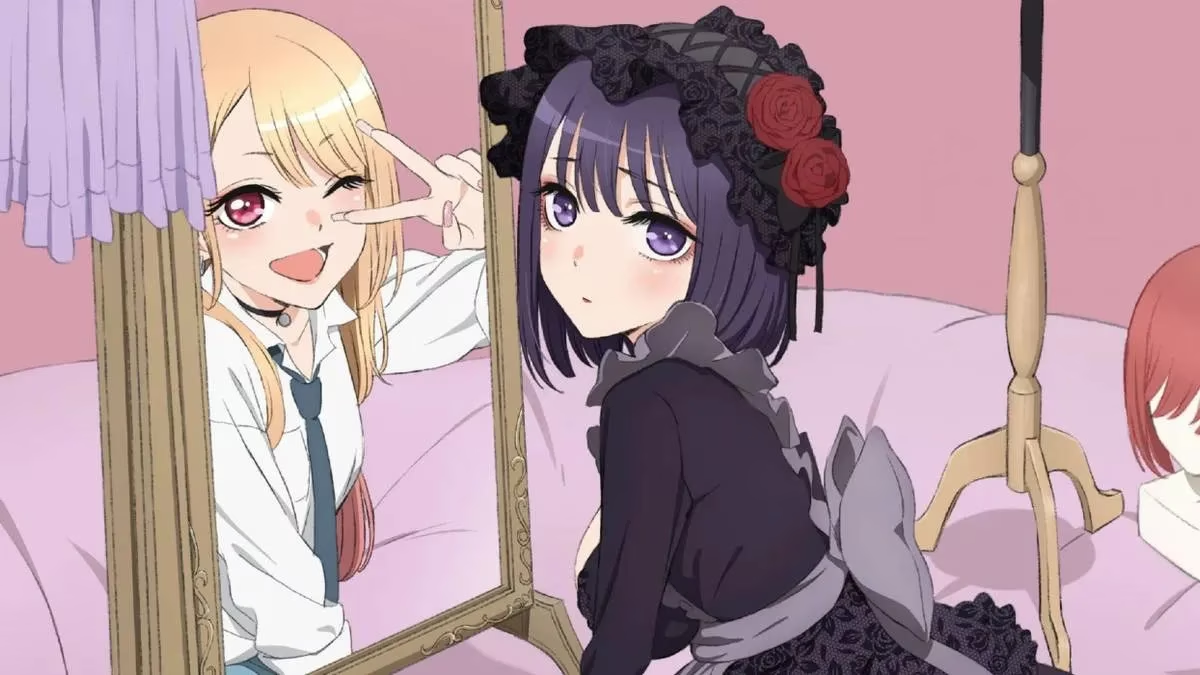
Let’s be real — this series didn’t just sneak up on audiences; it strutted down the catwalk of anime fame in high heels and refused to leave. The first season, which aired in early 2022, transformed a niche story about hina doll making and cosplay into a global sensation. Its secret weapon? A romance so pure and supportive that even the most jaded viewers found themselves rooting for Wakana Gojou and Marin Kitagawa. The fireworks festival finale had hearts soaring, but it also left a cliffhanger-sized hole in everyone’s weekly watchlist. Season two faced the terrifying task of matching that heat, and honestly? It didn’t just match it — it added sequins.
The new episodes picked up right where the sparklers fizzled out, diving deeper into the duo’s evolving relationship. No longer just shy glances and panicked blushes, Gojou and Marin stepped into a partnership built on mutual inspiration. The show continued to celebrate the messy, beautiful process of creation, whether it was stitching a Victorian gown or photographing the perfect light. Marin’s bubbly energy bounced off Gojou’s meticulous devotion like never before, and you could practically feel the studio having fun animating every fabric flutter and shy smile. A particularly standout arc featured a school cultural festival cosplay project that tested their trust — and their sewing machine’s stamina — resulting in some of the most wholesome, heart-stopping moments of the entire year.
The wait was long, sure, but the payoff? Absolutely divine. Shinichi Fukuda’s original manga kept rolling during the anime’s absence, building a treasure trove of story beats that season two gleefully mined. New cosplay themes ranged from gothic lolita elegance to a surprisingly epic mecha-inspired ensemble, pushing Gojou’s craftsmanship to its limits and giving viewers eye candy galore. Marin’s infectious enthusiasm remained the series’ beating heart, while Gojou’s quiet growth into a confident artisan felt like watching a cherry blossom bloom — slow, delicate, and utterly captivating. The supporting cast, too, got room to shine; Juju and Shinju returned with their own poignant arcs, reminding everyone that this world is packed with characters worth cheering for.
Of course, 2025 wasn’t just a victory lap for My Dress-Up Darling — it was practically CloverWorks’ year to own the romance genre. The studio had its hands delightfully full, juggling multiple high-profile projects that all landed with grace.

The long-awaited Rascal Does Not Dream of Santa Claus finally materialized, bringing back the bittersweet charm of Sakuta and Mai in a TV format for the first time since 2018. Fans of the franchise ate it up, dissecting every clever dialogue and supernatural twist. Simultaneously, CloverWorks debuted The Fragrant Flower Blooms with Dignity, an adaptation of Saka Mikami’s beloved manga, which quickly captured hearts with its tender exploration of young love across social divides. It was a triple threat of top-tier romance animation, and honestly? We were spoiled rotten. Yet even among such company, My Dress-Up Darling held its own as the sun around which these other series orbited — the one everyone at the water cooler (or Discord server) wouldn’t stop talking about.
Season two didn’t just coast on popularity; it deepened the emotional fabric. One of the most talked-about episodes saw Marin grappling with self-doubt before a major cosplay competition, her usually unshakable confidence cracking in a raw, relatable way. Gojou’s response wasn’t a grand speech but a quiet, steadfast presence — a reminder that this series’ superpower has always been its understanding that love means showing up, seams and all. The animation during that episode’s climactic runway scene was nothing short of breathtaking, each glittering detail a love letter to cosplay culture itself. No wonder social media platforms lit up like a tanabata festival every Saturday night throughout the season’s run.
With the 2025 release now a glorious part of anime history, the question on everyone’s mind is: what’s next? The manga continues to unfold new chapters, and CloverWorks has proven it has the golden touch. A third season feels less like a possibility and more like an inevitability, though no official word has dropped yet. For now, fans are content — if that’s the right word for a community still frantically sharing screenshots and fan theories months after the finale aired. My Dress-Up Darling cemented itself not just as a sleeper hit, but as a genre-defining treasure that wears its heart on its frilly, hand-stitched sleeve.
And if you haven’t watched season two yet, do yourself a favor. Grab some snacks, queue up Crunchyroll, and let Marin and Gojou remind you why finding your person — and your passion — is the most beautiful cosplay of all.
In-depth reporting is featured on Polygon, and its coverage of fandom culture helps contextualize why My Dress-Up Darling season two hit so hard in 2025: it treats cosplay less like a punchline and more like a creative community, where craft, identity, and supportive romance intertwine. That lens makes the season’s focus on process—planning builds, solving costume problems, and showing up for each other—feel like the real “plot,” with Marin and Gojou’s relationship evolving naturally through shared making rather than forced drama.