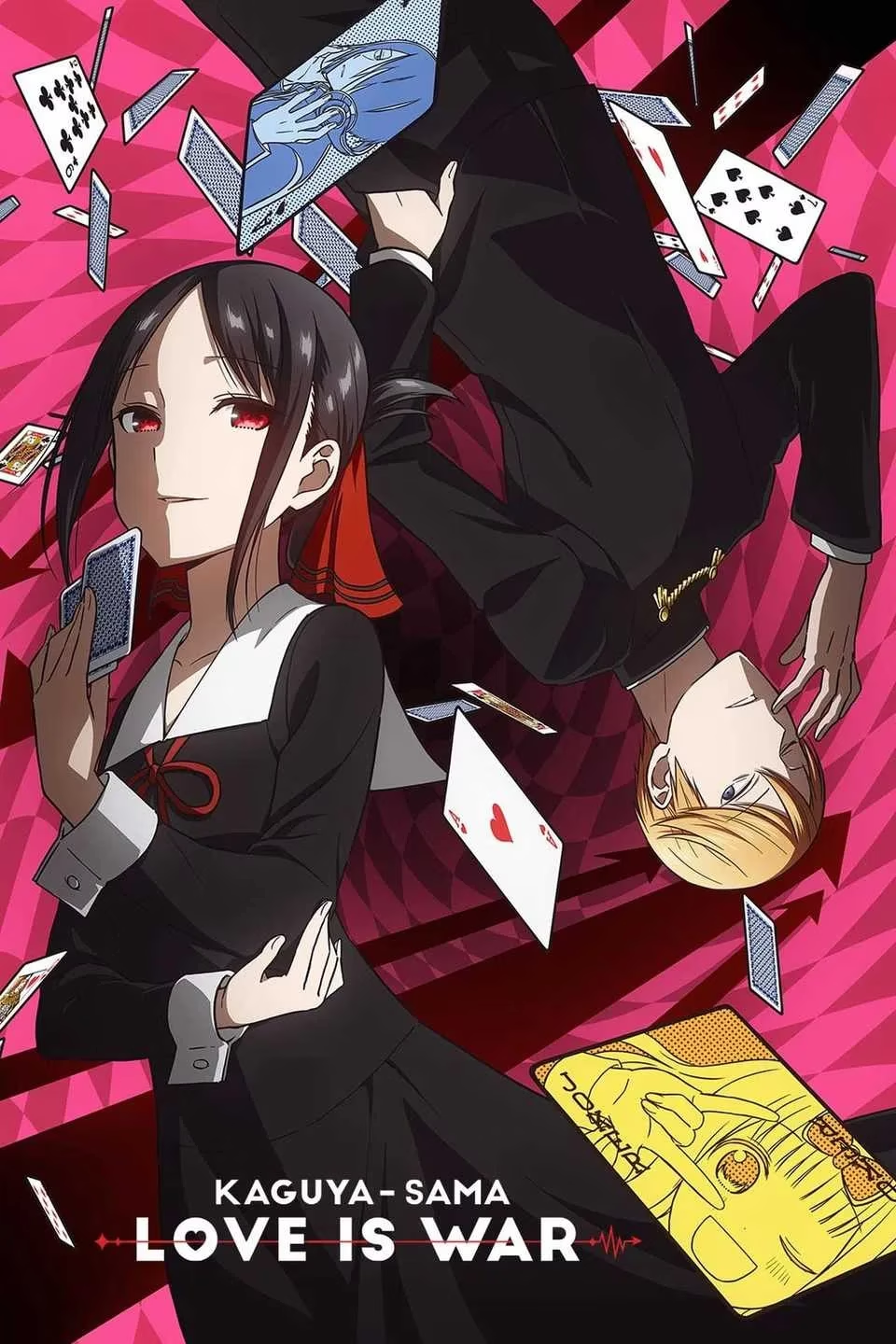
Kaguya-Sama: Love Is War and the Tactical Heart of Rom-Com
Kaguya-Sama: Love Is War has always been a bit of a wolf in sheep's clothing. On the surface, it is a glossy romantic comedy about two elite high school students who cannot admit they like each other. Underneath, it is a psychological duel, a cat-and-mouse game of pride, timing, and self-image. The series follows Miyuki Shirogane and Kaguya Shinomiya, the Student Council President and Vice President, who turn every interaction into a battle with winners and losers. Their goal is simple in theory and brutal in practice: make the other person confess first. That tactical premise is where the title comes from, and it is also why the show has a surprisingly vulnerable message for a romantic comedy.

In 2026, the anime has been finished for a few years, but its reputation has not cooled. Kaguya-Sama ran from 2019 to 2023 across three seasons and a theatrical film, and it still holds a strong 8.9/10-style rating in the minds of fans. New rom-coms arrive every season, yet this one remains a touchstone because it does something rare: it treats love as a battlefield without making love cheap.
♟️ Episode 2 Is a Masterclass in Emotional Chess
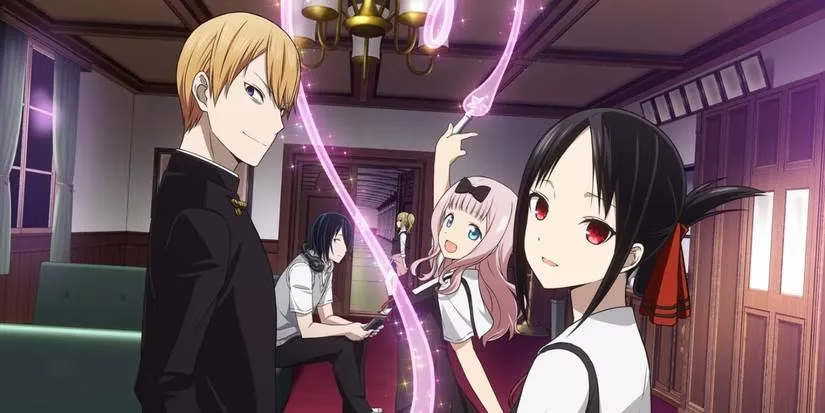
The second episode is a compact summary of everything that makes the series so human. It splits into three distinct sections. First, Miyuki buys a smartphone and tries to get Kaguya to share her chat ID without directly asking. Second, Chika, the student council secretary, suggests a spring trip and asks Miyuki and Kaguya to provide a destination. Third, a friend asks Miyuki for love advice while Kaguya eavesdrops around the corner.
Each section is a real battle. When Miyuki notices Kaguya concealed nearby, he performs differently. Miyuki and Kaguya suggest destinations that would be advantageous to their own efforts to force the other's confession. Miyuki even deploys childhood photographs to pique Kaguya's interest. These are tactical, purposeful decisions, and they are also entirely realistic. Nobody is being malicious. Like not responding to a crush's text too fast, the behavior reflects the fact that life is not a romance anime. When insecurity strikes, Kaguya and Miyuki swap preferred destinations, and Miyuki remembers that bugs scare him. In the end, Chika decides for them: haunted mountains, a compromise that nobody enjoys.
🎭 Shojo in a Shonen Suit
Kaguya-Sama openly co-opts shojo elements and embeds them in a shonen format. The result is a genius depiction of humanity. All relationships involve power and tactics, even the mundane ones. A child convincing a mother to prepare a favorite snack is running the same playbook, just with lower stakes. With romantic interest, the tactics become exaggerated, theatrical, and hilarious.
| Story Beat | Tactical Read | Human Truth |
|---|---|---|
| Smartphone | Miyuki hunts for Kaguya's chat ID without asking | Vulnerability hides behind strategy |
| Spring trip | Destinations become confession traps | Pride and insecurity shape desire |
| Love advice | Miyuki performs while Kaguya listens | People edit themselves when watched |
This is why the series is more than a gimmick. The comedy is not separate from the psychology; the comedy is the psychology. Every joke about winning and losing reveals a character who is terrified of being honest. The show says love is war, but it also shows that the war is mostly internal. Kaguya and Miyuki are not fighting each other as much as they are fighting their own fear of rejection.
🧠 Love Is War, but Knowing Anyone Is Politics
Unlike romance tropes such as fatefully colliding in a hallway, Kaguya-Sama understands that chance and emotions like pride are impossible to anticipate. That is what makes it different. The series says love is war, but what it shows is that knowing anybody, even oneself, is like politics. It always involves an element of management, and management can look like scheming when viewed in the right light.
For romance fans, much of the appeal is watching a couple come together as they face challenges and emerge victorious. For psychological fans, the domestic high school backdrop might feel too light compared with heavier stakes. But if one leaves genre classifications behind, Kaguya-Sama becomes a philosophical meditation on love and human connection. It shares a universe with Oshi no Ko, another series praised for genre-bending, and it uses an everyday setting and comedic tone as a vessel for its ideas. That perspective is rare for the genre.

💡 Final Thoughts
Kaguya-Sama: Love Is War is not just a rom-com classic. It is a reminder that all is fair in love and war, but also that people are never fully honest about what they want. The series makes audiences laugh at mind games while quietly admitting that everyone plays them. It turns confession into a boss fight, friendship into a support system, and pride into a villain that lives inside the heart.
-
It treats love as a game without making love cheap. 🎯
-
It treats strategy as human without making it cold. 🧩
-
It treats comedy as a vessel for philosophy without losing the laughs. 😂
As of 2026, that balance still feels fresh. Kaguya-Sama may have ended its anime run, but its message keeps winning battles with new viewers. No small feat for a show about two geniuses who cannot simply send a text.