Jane the Virgin: A Whirlwind of Love, Laughter, and Lasting Legacy
In the vast, shimmering sea of television romance, some stories are like perfectly brewed coffee—comforting, complex, and leaving a warmth that lingers long after the final sip. Jane the Virgin is one such creation, a five-season masterpiece that pirouetted onto The CW in 2014 and danced its way into the hearts of audiences, concluding its beautifully orchestrated run in 2019. Inspired by the vibrant heartbeats of classic telenovelas and the witty soul of modern romantic comedies, the series carved its niche not with a whisper, but with the delightful, chaotic fanfare of a surprise confetti cannon at a solemn ceremony. It was a show that critics and fans dissected with glee, utterly captivated by its melodramatic twists, sweeping love stories, and the earnest journey of its unforgettable heroine. A decade on, as we reflect from the vantage point of 2026, Jane the Virgin remains a hallmark, a testament to the power of a story that was unafraid to be both unabashedly sentimental and brilliantly self-aware.

At the center of this whirlwind is Jane Gloriana Villanueva, portrayed in a career-defining performance by Gina Rodriguez. Jane's life, meticulously planned like a librarian's color-coded index, is upended with the absurd precision of a cosmic joke when she is accidentally artificially inseminated. The premise—a devout young woman who has pledged to remain a virgin until marriage suddenly finding herself pregnant—could have been a one-note gag. Yet, the show, under the masterful guidance of showrunner Jennie Snyder Urman, used it as a launchpad for a profound exploration of motherhood, ambition, faith, and love. Jane navigates this seismic shift with a resilience that is both relatable and inspiring, balancing the complexities of her growing connection with the baby's father, Rafael Solano, with her deep history with her detective boyfriend, Michael Cordero.
The series leaned joyfully into its rom-com and telenovela roots from the very first frame. It was a loving parody, winking at the genre's tropes—the dramatic narrator, the shocking reveals, the love triangles that twist like ornate iron gates—while simultaneously celebrating them. This balance gave the show a unique texture; it could deliver a moment of heartbreaking tragedy or intense family drama, only to undercut it with a perfectly timed joke, ensuring the narrative never drowned in its own earnestness. The ensemble cast, including the formidable Andrea Navedo as Jane's mother Xiomara and the scene-stealing Ivonne Coll as her grandmother Alba, created a rich tapestry of relationships that felt as real and tangled as ivy on an old mansion wall.
Why Jane the Virgin Endures: The Core Ingredients 🎭
Beyond the pregnancy plot, the show's longevity stems from a perfect blend of elements:
| Element | Description | Impact on the Series |
|---|---|---|
| Magical Realism | Whimsical visual effects showing Jane's inner world—floating hearts, fantasy sequences, graphic novel-style pop-ups. | Allowed viewers to experience the story through Jane's imaginative, hopeful perspective, making her character development a front-row spectacle. |
| Self-Aware Satire | The show consistently commented on its own format and the romance genre. | Created a smart, nuanced layer that engaged critical viewers while still delivering pure romantic escapism. |
| Evolving Narrative | Willingness to let characters grow, relationships change, and status quos shatter across five seasons (17-22 episodes each). | Provided a satisfying, complete story arc with twists that had to be seen to be believed, free from the anxiety of sudden cancellation. |
| Thematic Depth | Explored themes of legacy, cultural identity, career dreams, and the many forms of family. | Elevated the show beyond a simple romance, giving it emotional weight and resonance. |
For a series so steeped in the romantic, its handling of love was refreshingly complex. Jane found herself in more than one love triangle, but these were never cheap plot devices. They were thoughtful explorations of different kinds of love—passionate, stable, familial, self-love. The show presented relationships as living things that required nurturing, communication, and sometimes, painful growth. It made audiences truly root for its couples because their journeys felt earned.
Now, in the streaming libraries of 2026, Jane the Virgin offers a unique comfort. Its story is a complete, five-season novel, a closed loop of narrative satisfaction. Watching it is like revisiting a beloved, detailed scrapbook where every pressed flower and scribbled note has a purpose. The show's introspective observations on life and love feel just as poignant today. It proved that a romance could be as intellectually engaging as it was emotionally potent, a delicate dance between heart and mind that few series have mastered.
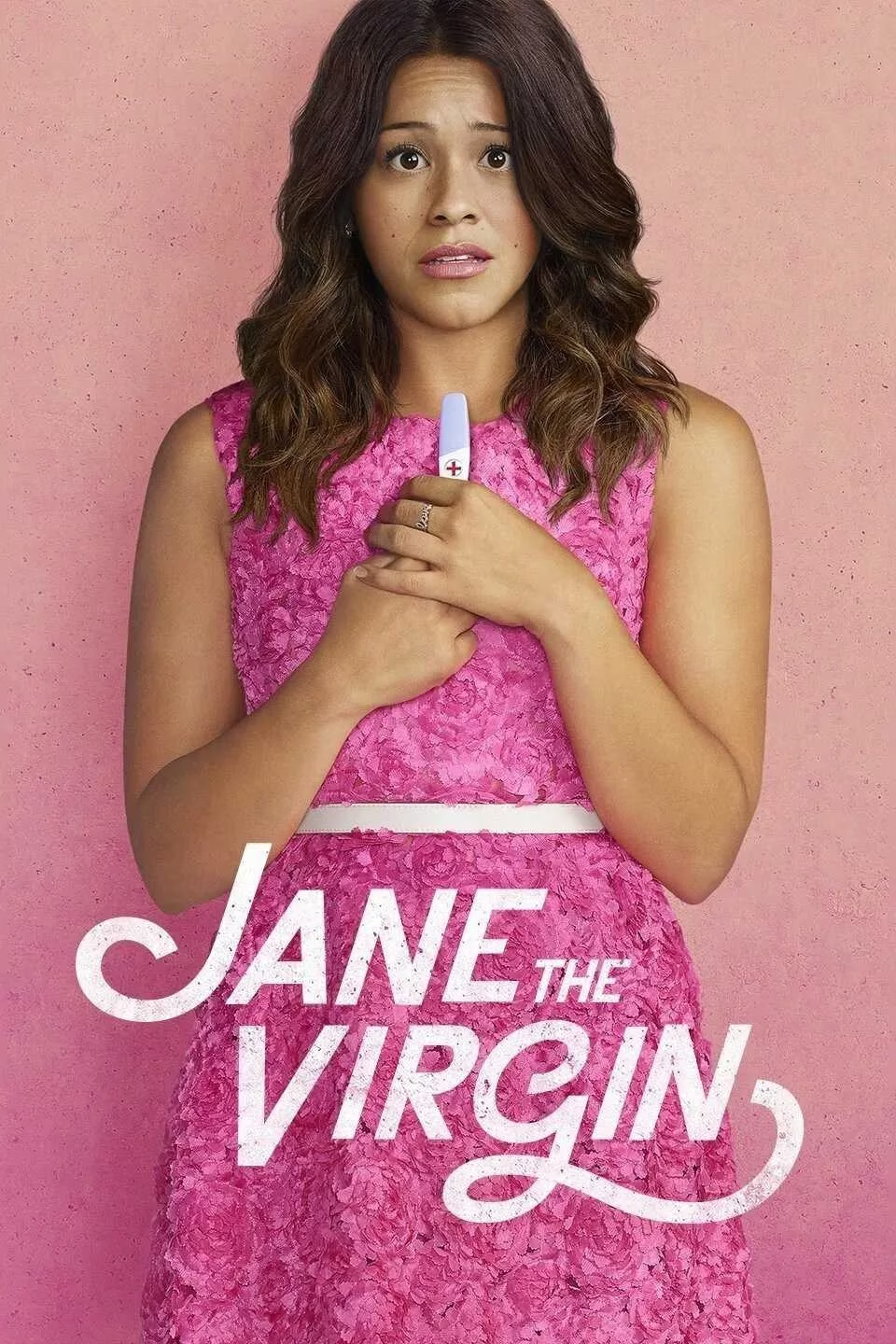
Ultimately, Jane the Virgin was more than a TV show; it was a cultural conversation starter that championed Latina leads and nuanced storytelling. Its legacy is that of a show that dared to be both a mirror, reflecting the beautiful mess of real life with its everyday ups and downs, and a stained-glass window, coloring that reality with hope, magic, and unwavering optimism. For anyone who believes in the transformative power of a well-told love story—a story that is, in its essence, as nourishing and essential as a loaf of warm bread on a difficult day—Jane Villanueva's journey remains an essential, and eternally rewarding, watch.