It Ends With Us: How the 2024 Film Could Fix the Book's Biggest Problem
Colleen Hoover's It Ends With Us arrived in theaters on August 9, 2024, carrying both the enormous popularity of BookTok and a set of serious criticisms. The novel, which follows Lily Bloom's relationship with Ryle Kincaid, was promoted with a flowery cover and a love-triangle pitch that often obscured its central subject: domestic violence. The film adaptation, starring Blake Lively and directed by Justin Baldoni, had a chance to correct that framing. By 2026, with the movie long since released, the question is no longer whether the adaptation could avoid the book's most damaging flaw. It is whether it did. And the answer depends on how carefully the screenplay by Christy Hall handled the line between romance and abuse.
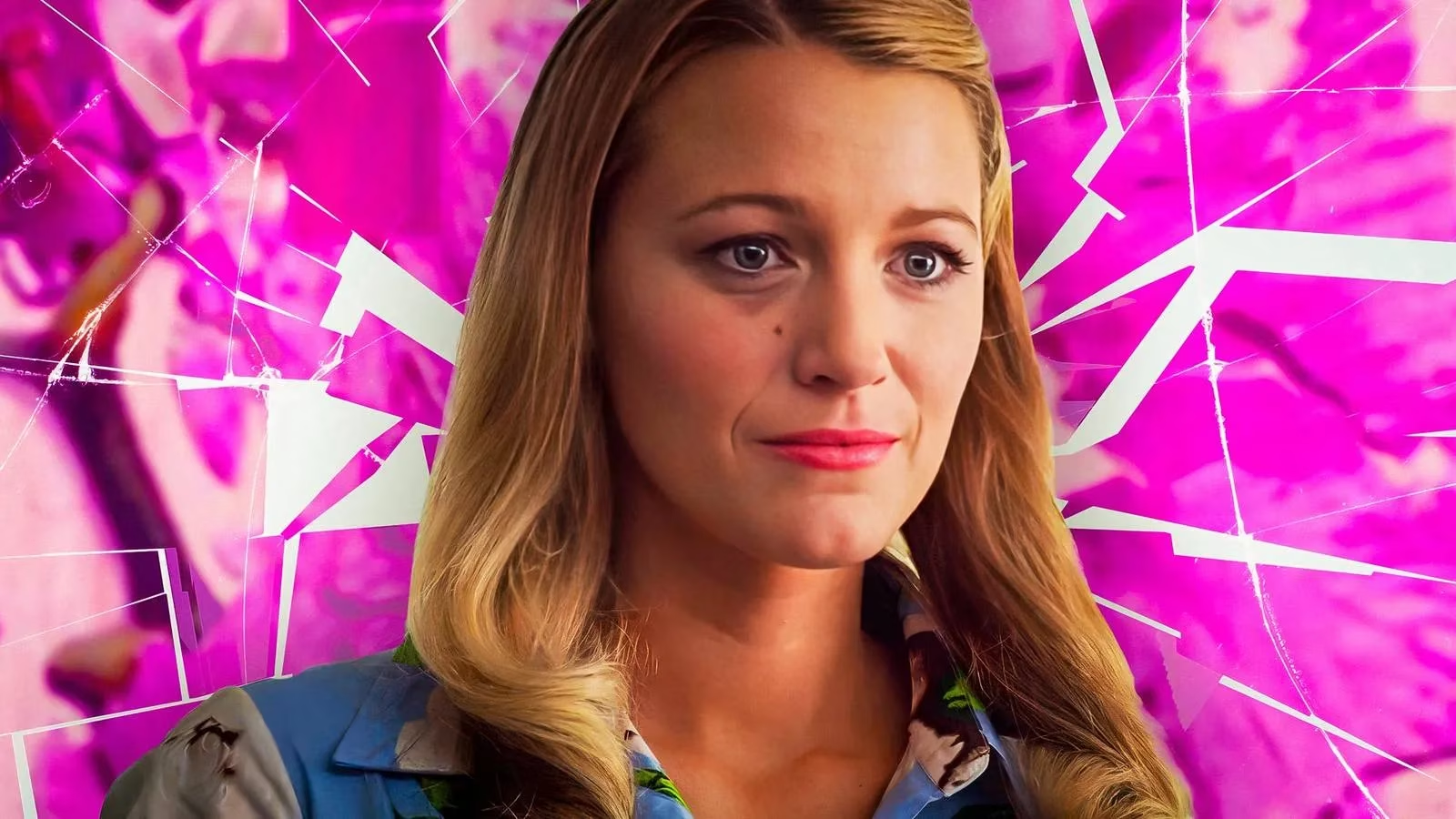
This article includes major spoilers for the book and its adaptation.
The Book's Central Problem 💔
Readers did not object to It Ends With Us because it depicted abuse. They objected because the novel sometimes seemed to romanticize it. Lily's connection with Atlas walks a delicate line, and Ryle's traumatic backstory is presented in a way that can write off his behavior. The story is told from Lily's point of view, but it lacks a strong reflective voice, the present-day perspective that interprets past events. Without that voice, moments where Lily's thoughts and actions contradict the intended message become confusing. There are brief flashes of clarity, including a line where Lily says Ryle's abuse is not okay. Yet the reflective voice is not used consistently, so the book's intentions can be hard to discern.
The ending drew particular criticism. Ryle respects Lily's boundaries, gives her space, and agrees to divorce without becoming angry or controlling. He is presented as the 'good guy' abuser. Lily then chooses a co-parenting relationship and gives him unsupervised time with their daughter, even though he has not taken active steps to change. That resolution lessens the emotional resonance of her decision to leave. It also risks suggesting that abuse can end neatly, without the danger and complexity that survivors often face.
Why Christy Hall Offered Hope 🧠
The choice of screenwriter gave the adaptation a real chance to fix these problems. Christy Hall may not have many screenwriting credits, but one of them handled heavy topics beautifully. I Am Not Okay With This touches on mental illness, grief, bullying, sexuality, and suicide. Any of those subjects can go wrong unintentionally. Hall and co-creator Jonathan Entwistle addressed them with compassion and nuance. If Hall approached It Ends With Us with the same care, she could balance Lily's mentality as someone in an abusive relationship with the story's larger themes.
How can a film show why someone stays without making the abuse look like love? How can it preserve the romance that makes the trap believable while still condemning the trap? Those are the questions the adaptation had to answer. Lily ignoring red flags and dismissing abuse for a long time is realistic. Even when she distances herself, she does not immediately end the relationship. If written well, her rose-colored glasses and trepidation do not have to contradict the message that Ryle and Lily's relationship is abusive, not romantic.
What the Film Needed to Keep 🎬
Changes were necessary if the big-screen version hoped to avoid the same criticisms as the book. That does not mean the movie needed to abandon everything from the source material. It needed to keep the perennial themes that resonate with victims of domestic violence.
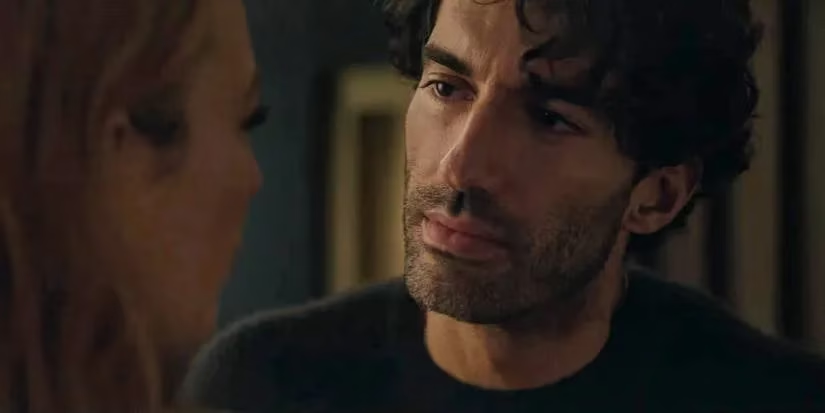
It would be foolish to remove every romantic moment between Ryle and Lily, because there is a reason abusers are so effective. Abusers do not display abusive behavior around or toward everyone. Despite its issues, the novel shows Ryle cycling through stages of abuse toward Lily. It is crucial that the movie displays those different stages, because they help explain why people like Lily remain in these relationships.
| Stage | What It Looks Like |
|---|---|
| Tension building | The abusive partner shows signs of abuse and control that increase in intensity. |
| Incident | The abusive partner commits an act of physical, sexual, or emotional abuse. |
| Reconciliation | The tension dissipates, and the abusive partner takes steps to get the abused person back on their good side. This can include apologies, gifts, affection, and extra attention. |
| Calm | The abusive partner shifts from apologetic to excusing and justifying the abuse, as well as gaslighting. |
The film also needed to maintain the book's focus on breaking the cycles of abuse. The title comes from the idea that survivors have the power to break the cycle so that the next generation has a better, healthier life. Lily witnessed domestic violence perpetrated by her father, which increased her likelihood of entering an abusive relationship in adulthood. The cycle continues when she gets into a relationship with Ryle, who physically, mentally, and sexually abuses her. However, Lily decides to break off the relationship and stop the cycle when she gives birth to her daughter, Emerson. Lily deserved to leave for herself too, but that empowering message is crucial for the adaptation's success.
The 2026 Lens: Did the Adaptation Succeed? 🔍
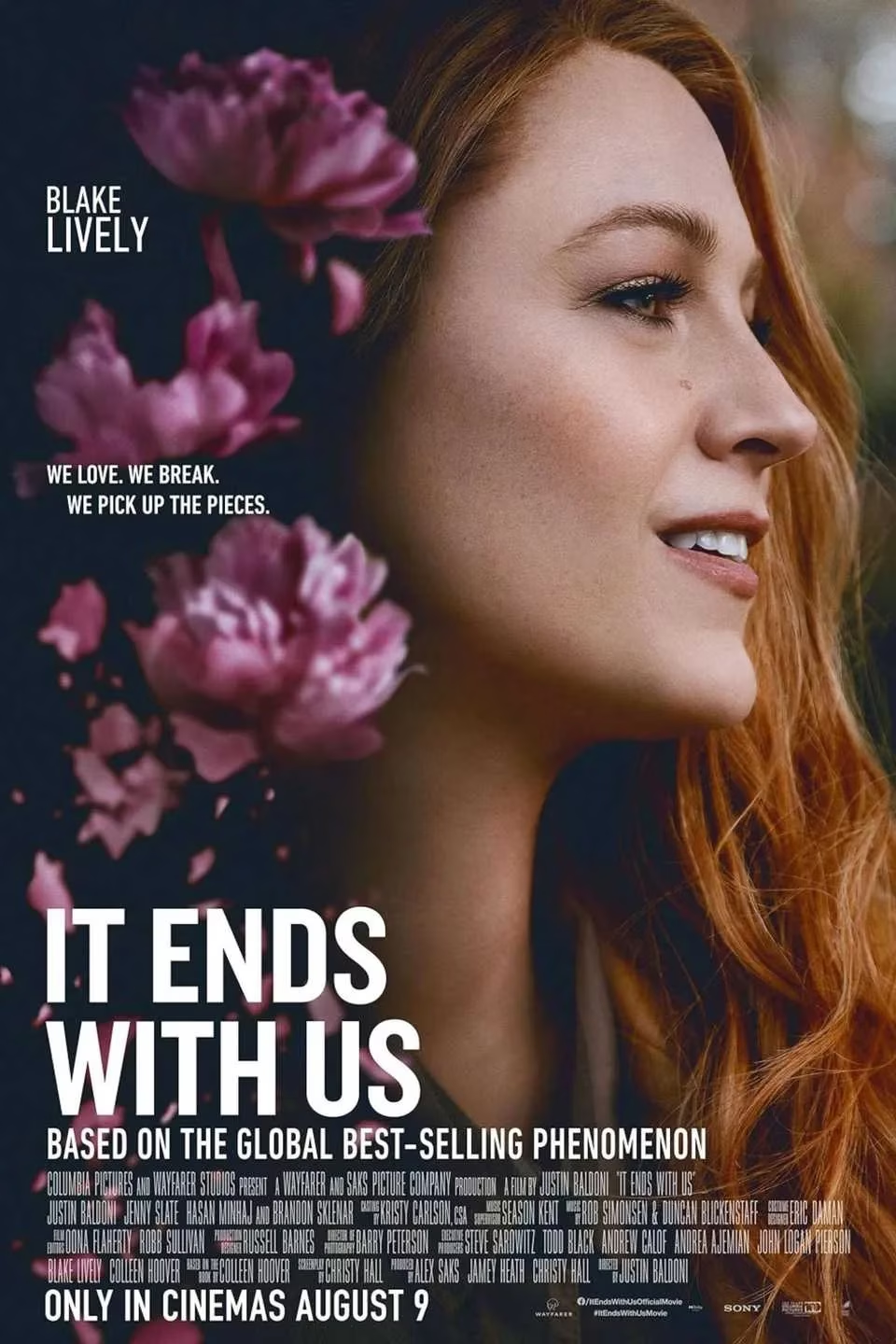
By 2026, audiences have had time to evaluate the film beyond its trailer and marketing. The movie took a different promotional approach from the book, making its domestic violence storyline abundantly clear. That was a promising start. The deeper test was always in the writing: whether the adaptation allowed Lily a reflective voice, whether it framed Ryle's behavior as abuse rather than passion, and whether it treated the ending with the gravity it deserved.
If the film softened Ryle's actions or presented his compliance as proof that he had changed, it would repeat the book's most serious mistake. If it showed the cycle of abuse while refusing to excuse it, it could become a more responsible version of a story that already means a great deal to many readers. The movie does not need to be a documentary about domestic violence. It does need to be honest about what domestic violence is.
Why This Story Still Matters 🔄
It Ends With Us remains popular because it speaks to a painful reality. Readers and viewers recognize Lily's confusion, her hope, and her fear. That recognition is powerful. It is also dangerous if the story blurs the line between love and control.
The adaptation's greatest opportunity was never to erase the romance. It was to show the romance, the danger, and the cycle together, without letting charm become an alibi. A film can depict an abuser's moments of tenderness and still make clear that those moments do not cancel the harm. It can show a survivor's hesitation and still honor her decision to leave. It can keep the emotional intensity of Colleen Hoover's novel while correcting its most harmful implications.
In the end, the question is simple: does the story help audiences understand abuse, or does it teach them to mistake it for love? The 2024 film had the right screenwriter, the right cast, and the right cultural moment to choose the first path. By 2026, that choice remains the measure of whether It Ends With Us truly breaks the cycle.