It Ends with Us: A Deep Dive Into Its Mixed Reception and Powerful Performances
In 2024, Colleen Hoover's literary phenomenon finally made its way to the big screen, but not without sparking considerable debate. Based on the 2016 bestseller that dominated book clubs and TikTok feeds alike, It Ends with Us arrived with sky-high expectations. Blake Lively stepped into the role of Lily Bloom, while Justin Baldoni pulled double duty as both director and the film's male lead, Ryle Kincaid. The romantic drama promised an emotional exploration of love, trauma, and breaking generational cycles. So, did it deliver? Well, the answer isn't exactly black and white.
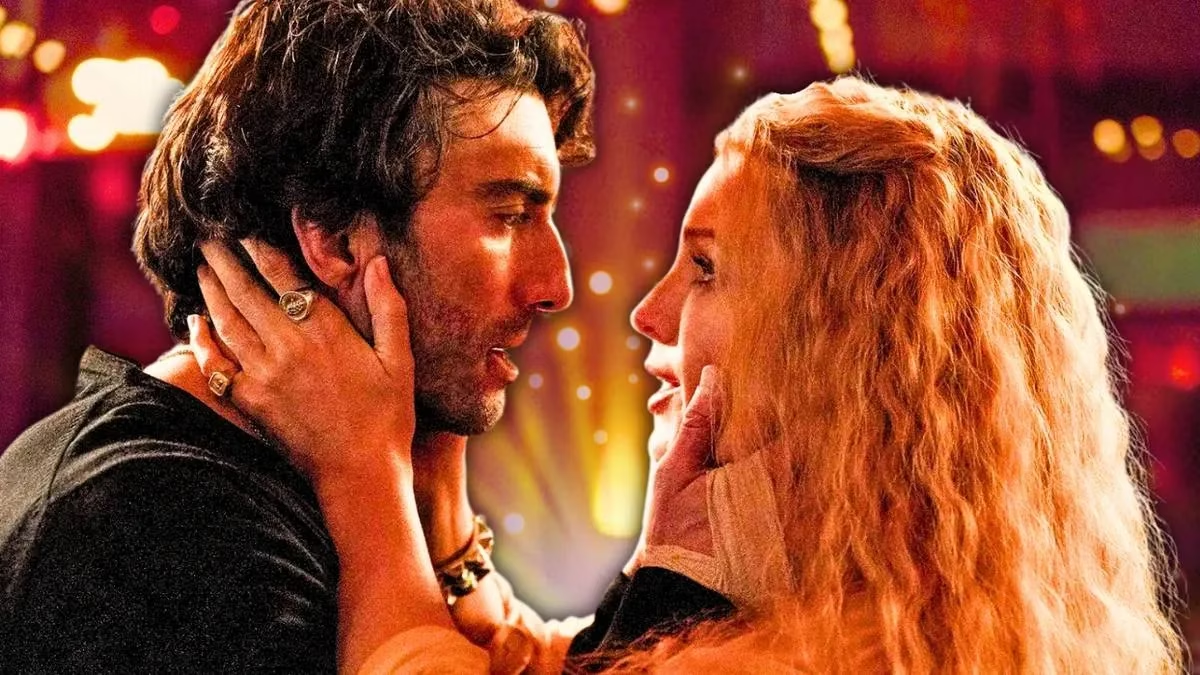
The numbers paint a fascinating picture. The Audience Rating on Rotten Tomatoes sits at a robust 94%, while the Tomatometer lingers at just 59%. Such a stark divide between critics and general audiences rarely happens by accident. It suggests the film resonates emotionally with viewers who connected with Hoover's source material, even if critics found structural flaws in its execution. This isn't entirely surprising—the novel itself has long been controversial, often marketed as a romance despite its dark, unflinching portrayal of domestic violence.
The Challenge of Adapting a Beloved Novel
Adapting a 384-page book into a two-hour film is never simple. Christy Hall, who wrote the screenplay, had to make difficult choices about what to keep and what to cut. The movie follows Lily Bloom through parallel timelines: her high school years with a homeless boy named Atlas, and her present-day life in Boston where she meets the charming neurosurgeon Ryle.
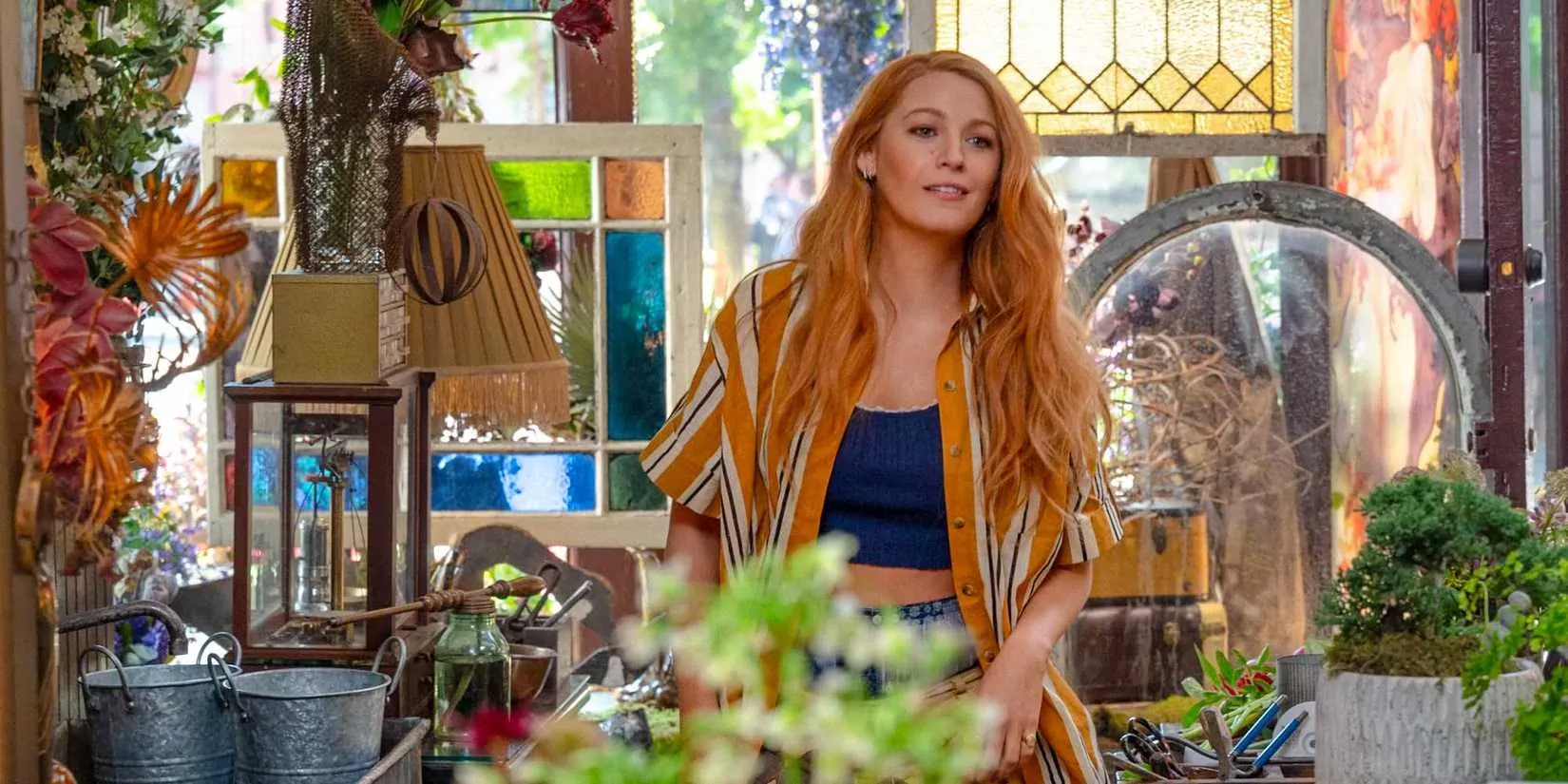
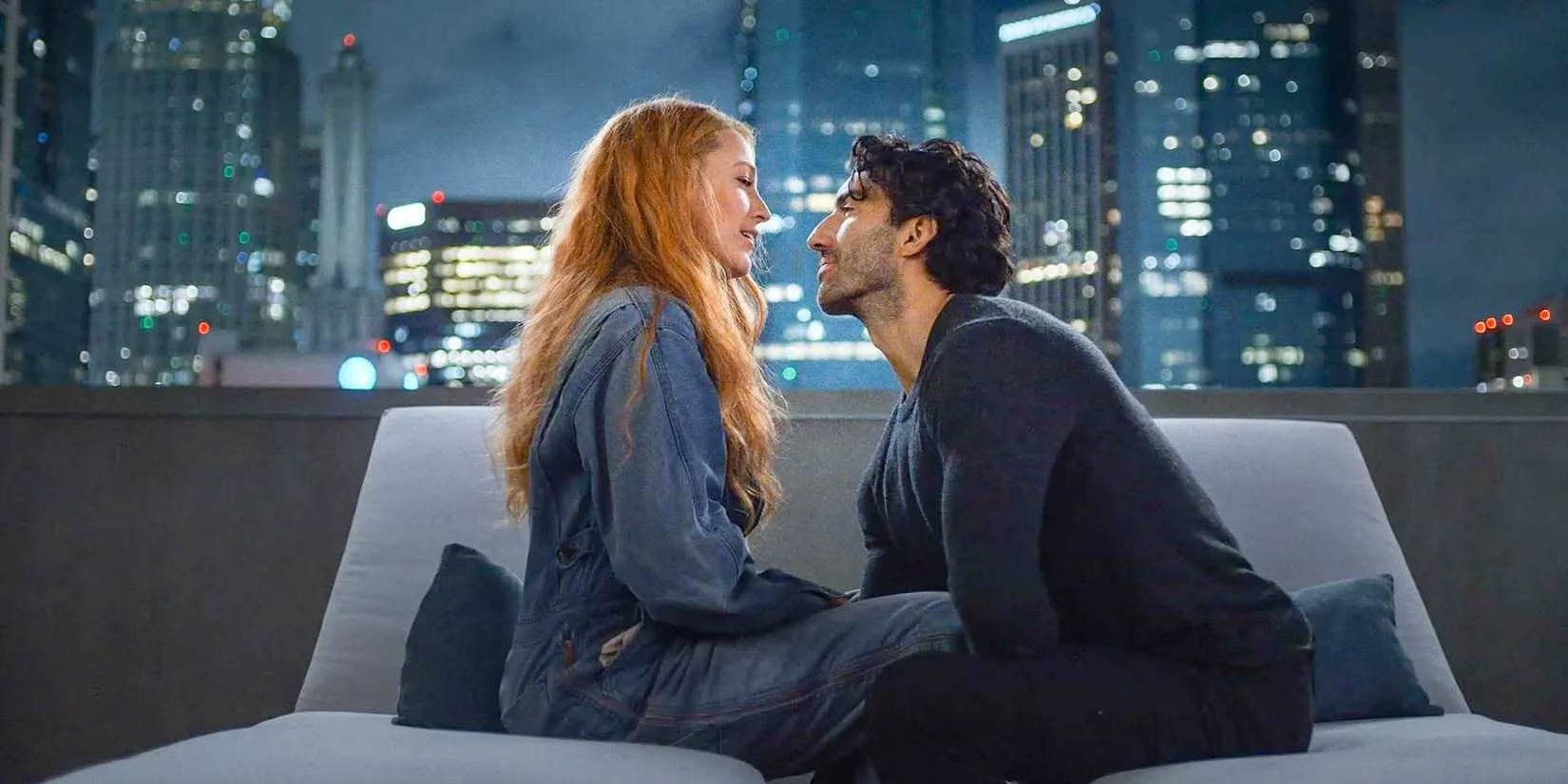
But here's where critics took issue: the story relies heavily on coincidence. Lily just happens to see Atlas through her bedroom window. She just happens to sneak onto Ryle's rooftop. A woman who hates flowers just happens to walk into Lily's flower shop and get hired—only to be revealed as Ryle's sister. Are these conveniences acceptable in fiction? Sure, but as Julian Roman from MovieWeb pointed out, the film "thrusts the characters together without establishing believable reasons." When too many pivotal relationships hinge on chance, the narrative starts to feel manufactured rather than organic.
A Responsible Depiction of Abuse
Despite its flaws, one of the film's most significant achievements is its refusal to romanticize abuse. This is a departure from the way the novel has often been marketed. The book frequently appears on romance recommendation lists, even though its core is a harrowing account of domestic violence. The movie, however, takes a different approach.
CBR reviewer Hannah Rose noted that "depictions of domestic violence aren't sensationalized or graphic, yet still read as grounded and shocking." This balance is tricky. Too much violence turns the story into trauma porn; too little glosses over the reality. The film manages to walk that tightrope. Isabella Soares of Collider highlighted a crucial improvement over the book: the movie "doesn't spend time redeeming Ryle from his actions." After his charm wears off and his abusive behavior emerges, the film refuses to soften him. Even in his sweetest moments, viewers can no longer see him as a good man. That's a bold, necessary choice.
Pacing Problems and Character Depth
At 2 hours and 10 minutes, It Ends with Us overstays its welcome. The bulk of the runtime is devoted to building Lily and Ryle's relationship—an understandable choice given the film needs to establish their connection before Ryle reveals his darker side. Yet this choice has consequences. The romantic montages begin to drag, and by the time the domestic abuse scenes finally arrive, audiences might find themselves checking their watches. Isn't that precisely when the story should be holding them most captive?
Compounding this issue is the lack of character development. The third-person perspective of the film can't capture the interiority that made Lily's first-person narration in the book so compelling. Lovia Gyarke of The Hollywood Reporter called the characters "stubbornly thin," and she's not wrong. Allysa and Lily's friendship feels particularly underdeveloped, existing more as a plot convenience than a genuine bond.
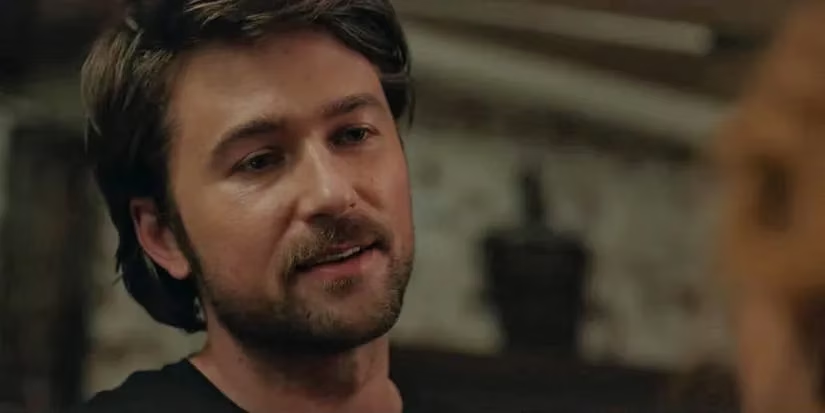
The most underserved character, however, is Atlas Corrigan. In the books, Atlas is a major figure—Lily's first love and a symbol of a different kind of relationship. The movie attempts to give him depth through flashbacks, but his present-day appearances are so brief that he feels more like a plot device than a fully realized person. Brandon Sklenar does what he can with the material, but the script fails to establish Atlas outside of his tropes. Soares accurately described adult Atlas as "one-note." If the sequel It Starts with Us gets adapted—a real possibility given the original's box office success—perhaps Atlas will finally get the character treatment he deserves.
The Performances That Carry the Film
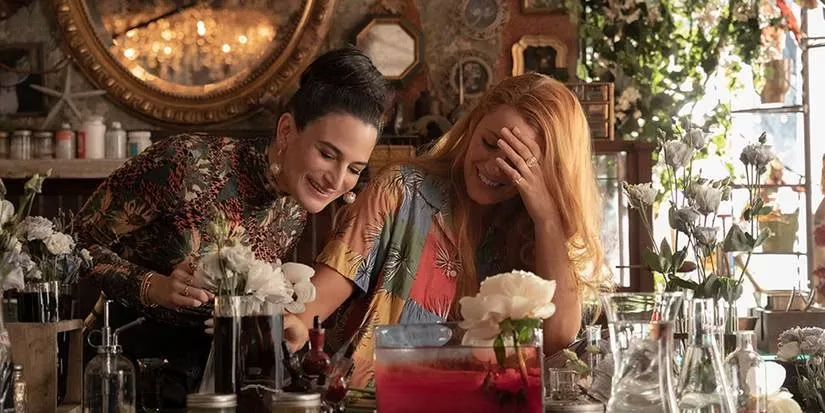
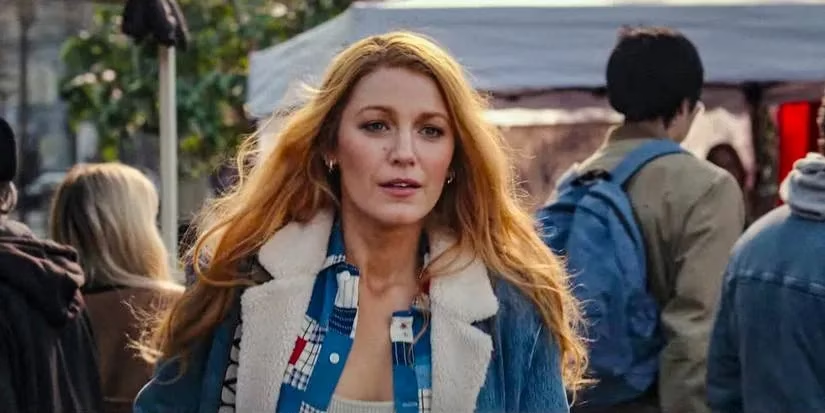
Critics may have panned the script, but nearly everyone agrees on one thing: Blake Lively and Justin Baldoni deliver exceptional performances. Lively tackles one of her most challenging roles to date, navigating Lily's denial, conflict, and eventual acceptance with heartbreaking authenticity. Watching her journey is visceral—she makes you feel every emotional beat.
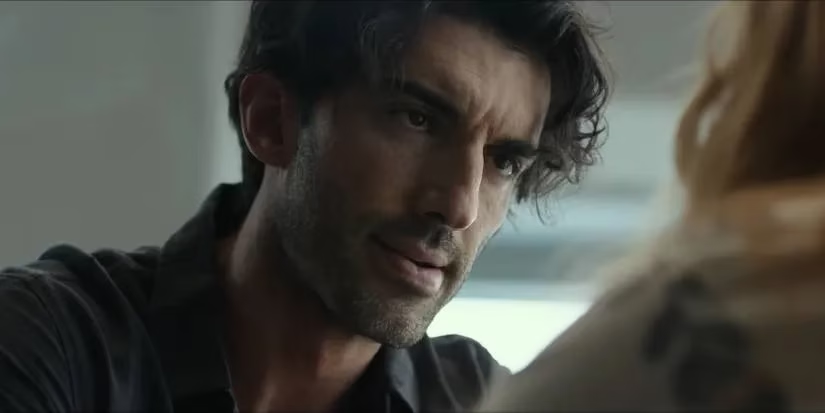
Baldoni faces an equally difficult task. He must make Ryle charming enough that audiences understand why Lily falls for him, yet not so sympathetic that they want her to stay. Roman compared his portrayal to "Jekyll and Hyde," and the comparison is apt. Baldoni nails the jarring shift in Ryle's behavior, making it easy to see why Lily buys his early excuses and why leaving him is so agonizing.
An Ending That Rushes the Hardest Part
The film's title speaks to breaking the cycle of abuse. Lily tells her newborn daughter, "It ends with us," promising to protect her from the violence Lily witnessed as a child and experienced as an adult. It's a powerful moment. Yet the path from Lily leaving Ryle to the film's conclusion is compressed into montages and quick scenes. This undermines the difficulty of leaving an abusive relationship—a choice that is rarely simple or swift.
Sarah Hunter Simanson of HuffPost argued that by cutting key conversations, the film "bypasses the hard realities of Lily's bravery." Nick Shager of The Daily Beast went further, writing that by "concluding in fairy tale fashion, It Ends with Us utterly undermines its heroine." The struggle to escape abuse is a struggle, and the film's rushed final act doesn't fully honor that. It's arguably the movie's most damaging misstep.
The Verdict
It Ends with Us is a film of contradictions. It succeeds in refusing to romanticize abuse, features powerhouse performances, and offers a responsible depiction of a difficult subject. But it stumbles with thin characters, a bloated runtime, and an ending that rushes its most important emotional beats. The audience-critic divide is real, and it's not hard to see why. For fans of Hoover's novel, the emotional core may be enough. For critics and casual viewers, the structural flaws are harder to ignore.
What does this mean for future adaptations of Hoover's work? The answer remains unclear. But one thing is certain—conversations about how to responsibly depict domestic violence on screen are more important than ever in 2026, and It Ends with Us has contributed meaningfully to that dialogue, flaws and all.