Don Jon at 13: Gordon-Levitt Says 2013 Rom-Com Is More Relevant Than Ever
More than a decade after Don Jon first arrived in theaters, Joseph Gordon-Levitt is arguing that his 2013 romantic comedy has not aged so much as sharpened. In 2026, 13 years after the film’s September 12, 2013 release, the writer-director-star says its themes of gender roles, objectification and intimacy feel less like period pieces than like diagnostic tools for the present. The movie, which premiered as a Sundance Film Festival favorite, went on to gross $41 million worldwide and earn an 80% fresh rating on Rotten Tomatoes. It remains a curious, confrontational outlier in the rom-com landscape: a story about a modern-day Don Juan that is less interested in seduction than in the cages people build for themselves.
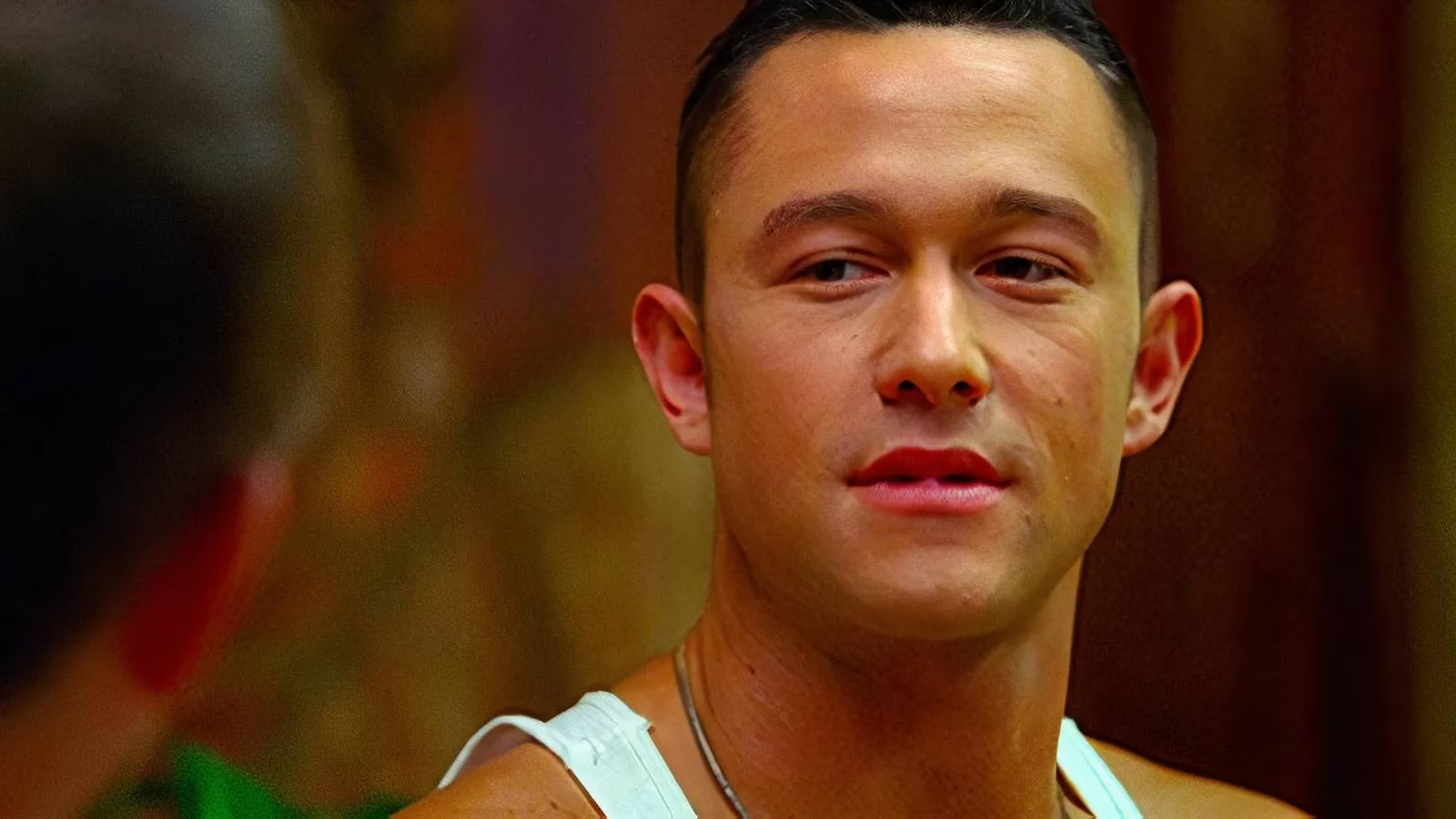
In recent remarks, Gordon-Levitt explained why the film’s concerns have only grown more urgent. “A lot of the themes in that movie have only become a lot more relevant in the last decade,” he said. “A lot of that movie is about gender roles, but I think it goes beyond gender. It’s a movie about objectification. He objectifies himself. He objectifies his gender. He objectifies his religion. He objectifies his friends and his family and his car. And he objectifies the women that he has sex with.”
That litany is the engine of the film. Gordon-Levitt’s Jon is not merely a womanizer; he is a man who has learned to see every part of life as a category to be rated, consumed or dismissed. His gym routine, his church attendance, his family dinners, his car and his conquests all become items on a scorecard. The movie’s critique lands like a slow-acting reagent, revealing sediment that had not yet settled when the film was first released. What looked in 2013 like a cheeky comedy about porn addiction and unrealistic expectations now reads as an early portrait of a culture saturated by performance, metrics and self-objectification.
The film’s objectification operates on several levels:
-
Self: Jon treats his body as a machine to be maintained and displayed.
-
Gender: He performs a rigid version of masculinity that leaves little room for tenderness.
-
Religion: Church becomes a box to check rather than a source of meaning.
-
Relationships: Friends, family and lovers become supporting players in his personal movie.
A Cultural Tuning Fork 🎚️
Gordon-Levitt has described the film as a cultural tuning fork: struck against the decade, it keeps humming with new resonance. He pointed to one of the movie’s most pointed examples of outdated gender expectations: the idea that a man should not clean his own house. “A man’s not supposed to clean his house. It’s not manly to do that,” he said. “That’s obviously a very old-fashioned idea. In the 10 years since, it’s become even a more deeply old-fashioned idea. At this point, it’s hard to imagine that anybody would believe that. But not only did people believe it in the past, if you step out of your bubble for a second, there are still tons and tons of people all over the world who still very much hold this belief and see gender in this way.”
That tension is central to Don Jon. The film does not simply mock Jon’s immaturity; it shows how his ideas about masculinity are reinforced by family, friends, media and religion. His objectification is not a solitary vice but a social ecosystem. The same is true of Barbara, played by Scarlett Johansson, whose romantic fantasies come with their own rigid script. Their relationship fails not because they are villains, but because neither can see the other outside the roles they have assigned.
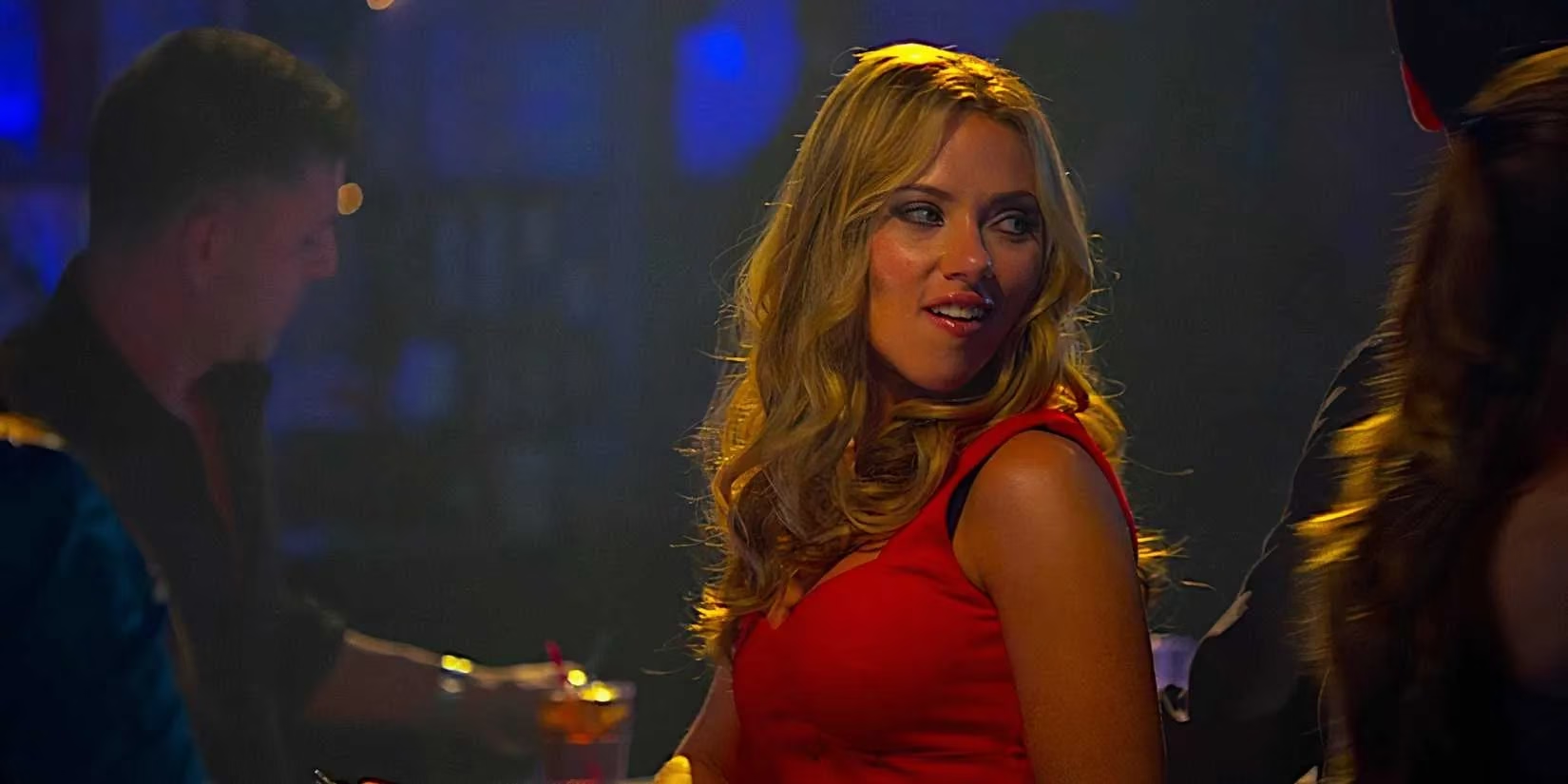
Gordon-Levitt explained that failure in terms that feel almost therapeutic. “They can’t have a deeply loving and meaningful relationship because they’re so focused on what everything is supposed to be rather than what is,” he said. “I get a lot more out of life if I’m less focused on the categories I fit into and more leaning into what makes me unique.” That observation gives Don Jon its bittersweet aftertaste. It is a comedy about a man who thinks he wants a fantasy, and a woman who thinks she wants a fairy tale, only to discover that both have been chasing images instead of people.
A Strong Cast and a Nolan Warning 📊
The film’s longevity is also tied to its ensemble. Gordon-Levitt wrote, directed and starred, receiving support from Scarlett Johansson, Julianne Moore, Brie Larson, Tony Danza and Glenne Headly. The cast alone makes Don Jon worth revisiting over a decade later. It also features memorable cameos from Anne Hathaway, Channing Tatum, Emily Blunt and John Krasinski, a roster that now looks like a time capsule of 2010s Hollywood.
| Detail | Information |
|---|---|
| Release date | September 12, 2013 |
| Runtime | 90 minutes |
| Director | Joseph Gordon-Levitt |
| Writer | Joseph Gordon-Levitt |
| Worldwide gross | $41 million |
| Rotten Tomatoes | 80% fresh |
| Key cast | Scarlett Johansson, Julianne Moore, Brie Larson, Tony Danza, Glenne Headly |
| Notable cameos | Anne Hathaway, Channing Tatum, Emily Blunt, John Krasinski |
Gordon-Levitt’s decision to direct himself was not universally endorsed. Christopher Nolan, who directed him in The Dark Knight Rises, advised him against trying to direct himself in Don Jon. Gordon-Levitt elected not to take that advice, and the film became his feature directorial debut. The result demonstrated that he could do far more than act. His writing is perceptive, his direction confident, and his willingness to sit inside an unlikable character’s point of view gives the movie a bite that many romantic comedies avoid.
In 2026, Don Jon remains a good candidate for rediscovery. Its unique take on romance, and on the obstacles that stand in the way of two people staying together, is as fresh as ever—perhaps fresher than when it came out. The film’s central insight is not that men and women are from different planets, but that everyone can become a prisoner of the script they have been handed. Don Jon asks whether people can put down those scripts long enough to accept themselves and others on their own unique terms. More than a decade later, that question has lost none of its heat.
The following breakdown is based on reporting and criticism from Kotaku, and it frames Don Jon less like a dated rom-com and more like a study of “systems” people optimize—Jon’s workouts, church visits, dating expectations, and even porn consumption all function like grind loops that reward surface-level metrics over genuine connection. Read through that lens, the film’s real target isn’t simply one man’s habits, but the broader culture of self-objectification and rigid roles that turn relationships into performance and intimacy into another collectible.